We Are All Honest Abes
A Weekend with the Association of Lincoln Presenters

On a Thursday night in late April, Abraham Lincoln forgot his own nickname.
Lincoln, dressed in his full top hat, black suit and chin beard, was sitting in a metal chair, under a boutique art deco chandelier. For the life of him, he couldn’t remember what he’d been called for opposing the Mexican-American War as a congressman.
Across the room, another Lincoln did remember. Wearing a red silk suit, he scribbled down the words “Spotty Lincoln” on his answer sheet. He then went back to browsing the Lincoln memorabilia which lined the back wall of the Kalamazoo Garden Inn conference room: busts of Lincoln’s head, books about his upbringing, and socks with his face on them.
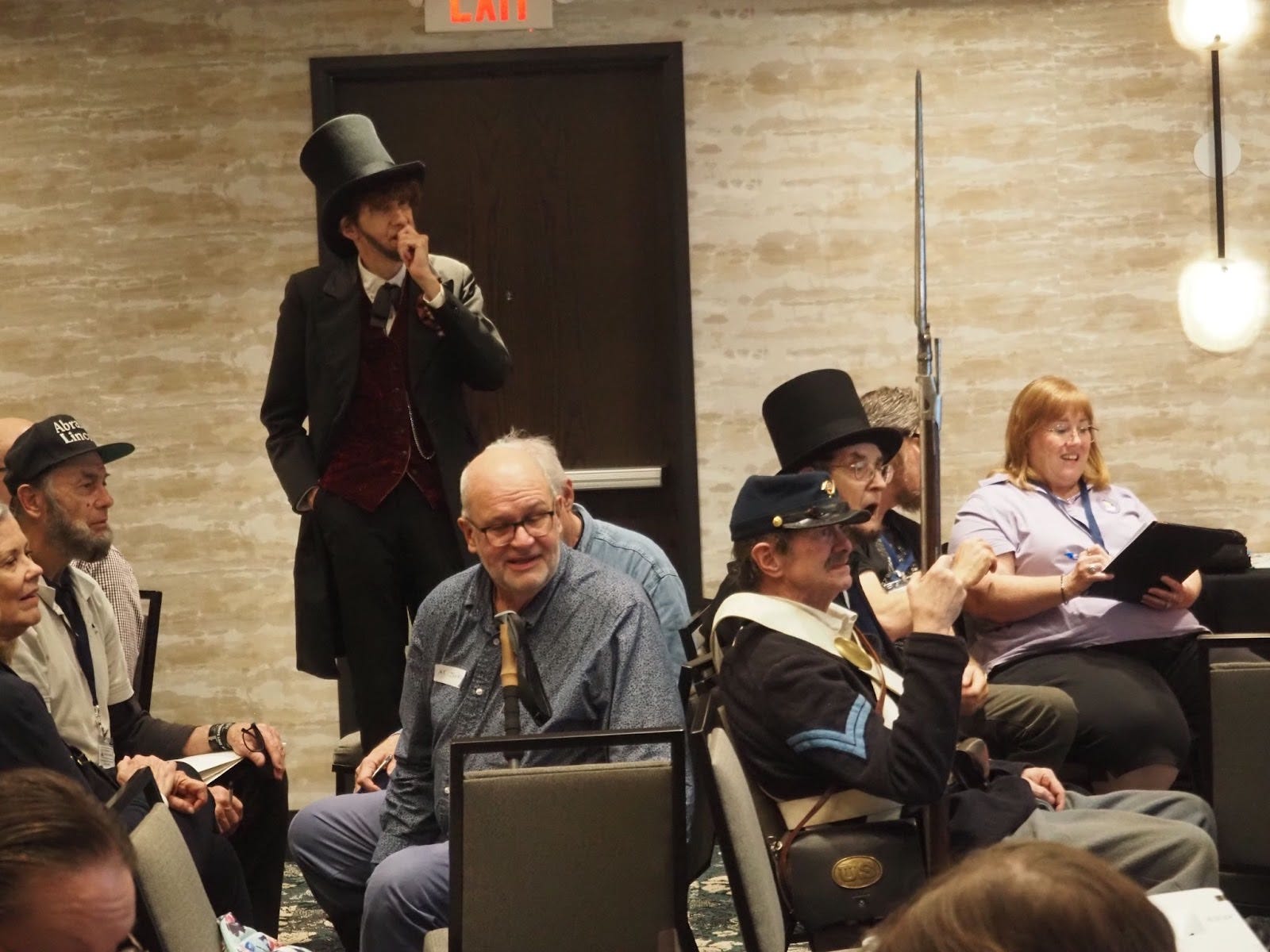
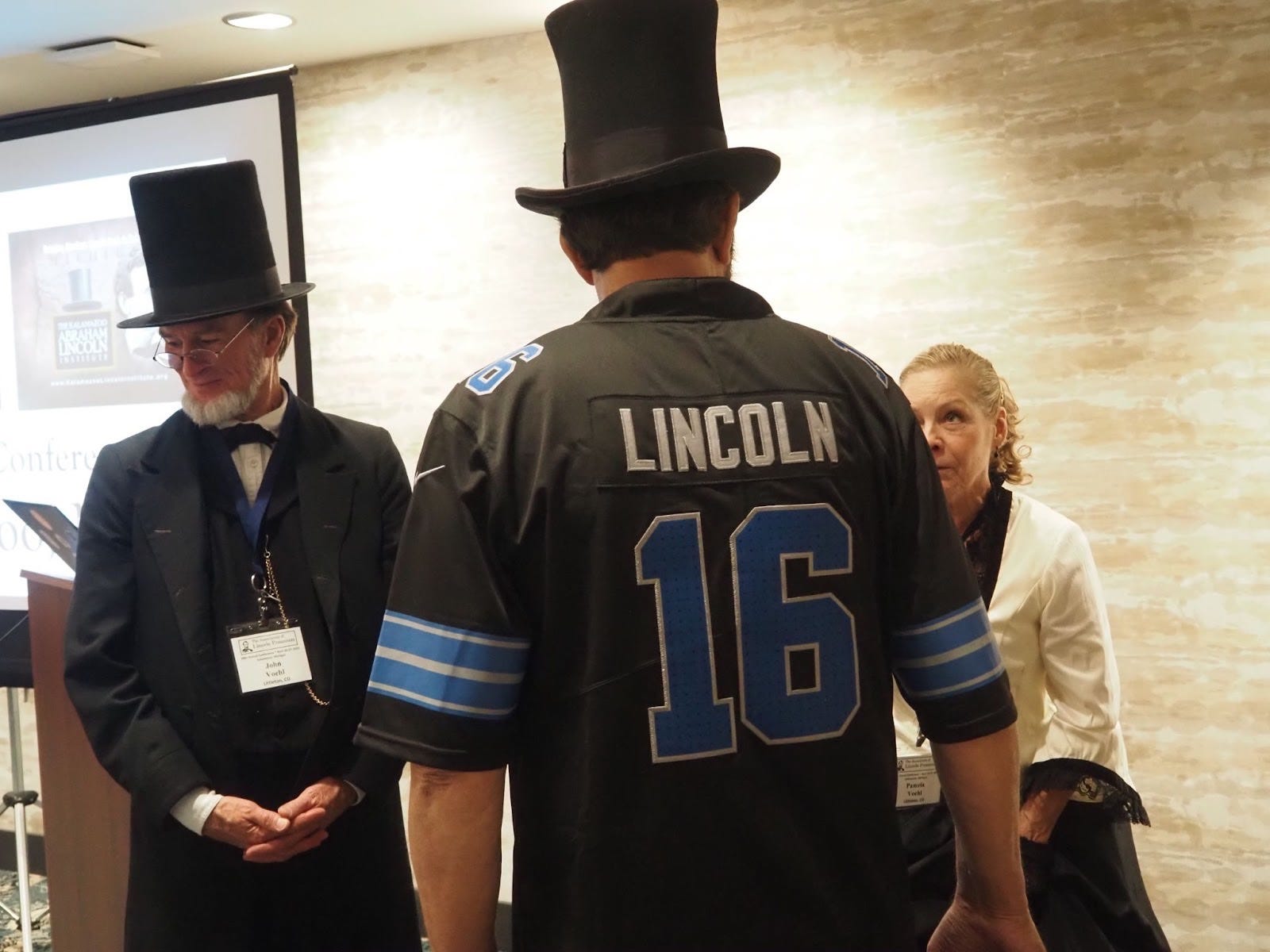
A third Lincoln, leading the trivia game, asked four more questions before revealing the answers. He reminded the room — filled with 20 other Abes — that using their “portable telegraph machine” to look up solutions would be cheating. After the leading Lincoln revealed the answer to the nickname question, the Lincoln who got the query right cheered. A Lincoln wearing a #16 Detroit Lions jersey with “Lincoln” on the back yelled out that the other Abe must have cheated. Someone wearing a baseball cap that said “Abraham Lincoln” rolled his eyes, while a Lincoln in a Hawaiian shirt sat in the back and stayed out of the chaos. A man playing Jefferson Davis, with a Southern white suit, shook his head. The Lincoln leading the trivia game tried to calm the chaos.
“We are all honest Abes,” he reminded the room. “If we cannot be honest, who can be?”
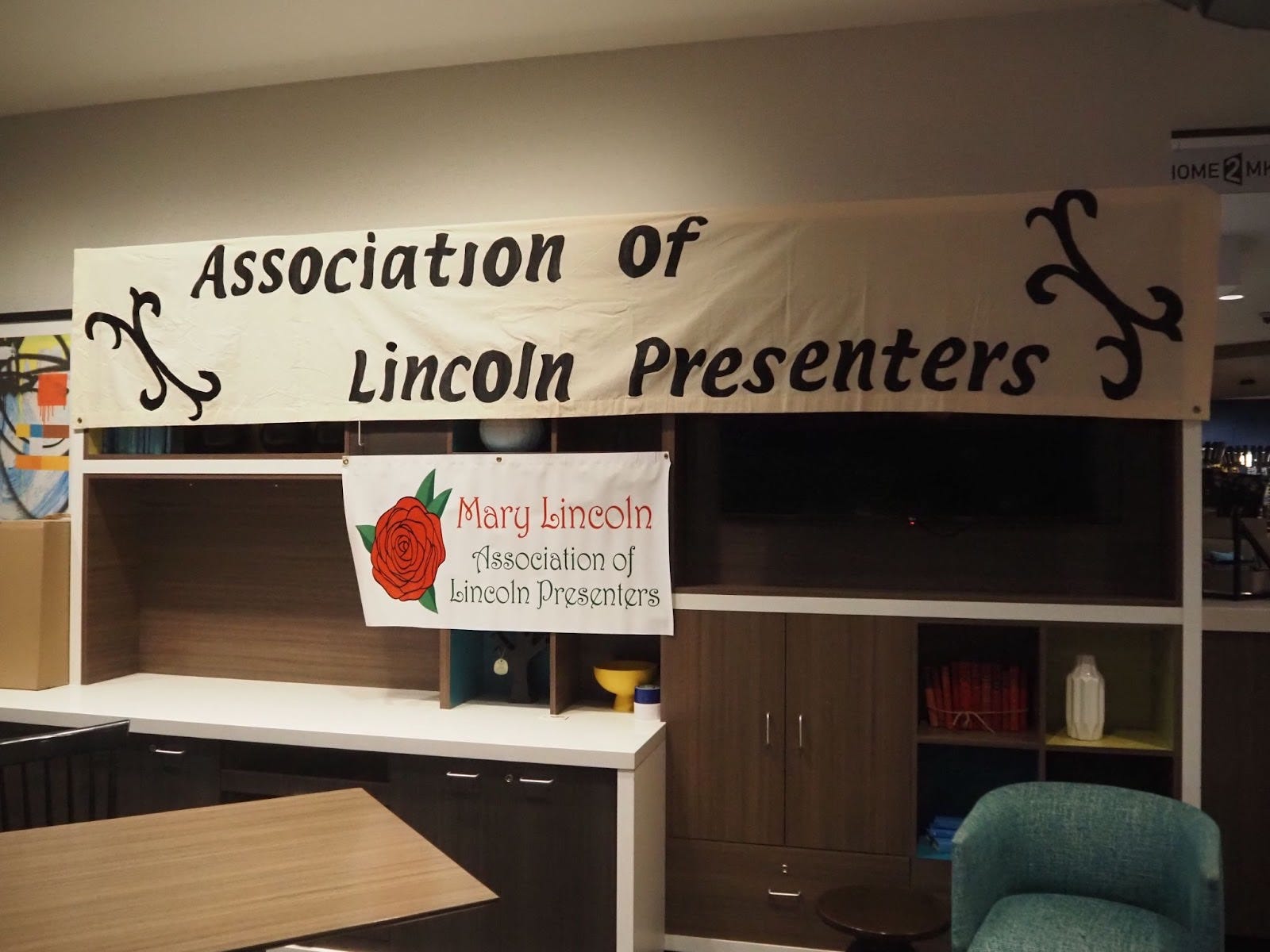
Why were there 20 Abraham Lincolns in a Kalamazoo Garden Inn? Well, that’s what the Lincolns were there to figure out. The group was gathered for the annual conference of the Association of Lincoln Presenters, a group of over 100 Abraham Lincoln reenactors. Lincoln performer Dan Bassuk founded the Association in 1990 after he met another Abe on a trip to Vermont. He thought that if there were a way to “link the Lincolns,” the group could all learn from each other about Honest Abe and how to best portray him.
Every Abe in the Association has an origin story, and every one has a different reason for acting like Lincoln. Whit McMahan started as a reenactor after a worker at a Wendy’s drive-through thought he looked like Lincoln and said “Four score and seven years ago” while handing him his order. Larry Elliott focuses on Lincoln’s relationship with religion because he’s a “a big believer in the Bible.” Ronald Lowe tells stories from Lincoln’s time as a lawyer because in the 1990s, he was “a new lawyer without a client base” who wanted to build a quirky brand customers would like. For all of them, being Lincoln is personal, not historical. They portray the former president to fix some problem in their life.
All those visions of Honest Abe come together at the Association’s annual conference, always held in a town that Lincoln visited. But 29 conferences in, the Lincolns have blown through most classic Lincoln sites like Washington, D.C., and Springfield, Illinois. So this year, they had to go to Kalamazoo, where Lincoln journeyed for a single day in 1856 to speak on behalf of Republican presidential nominee John Fremont — the only time Abe left the state of Illinois that year. Kevin Wood, the conference organizer, said no one’s quite sure why Lincoln bothered to go to Kalamazoo. The Association figured they’d gather up a bunch of Lincolns to hear talks from local historians and try to answer that question.
“That’s the reason for this conference being in Kalamazoo, kind of to research or to dive deep into that whole story of why Lincoln came to Kalamazoo,” Wood said.
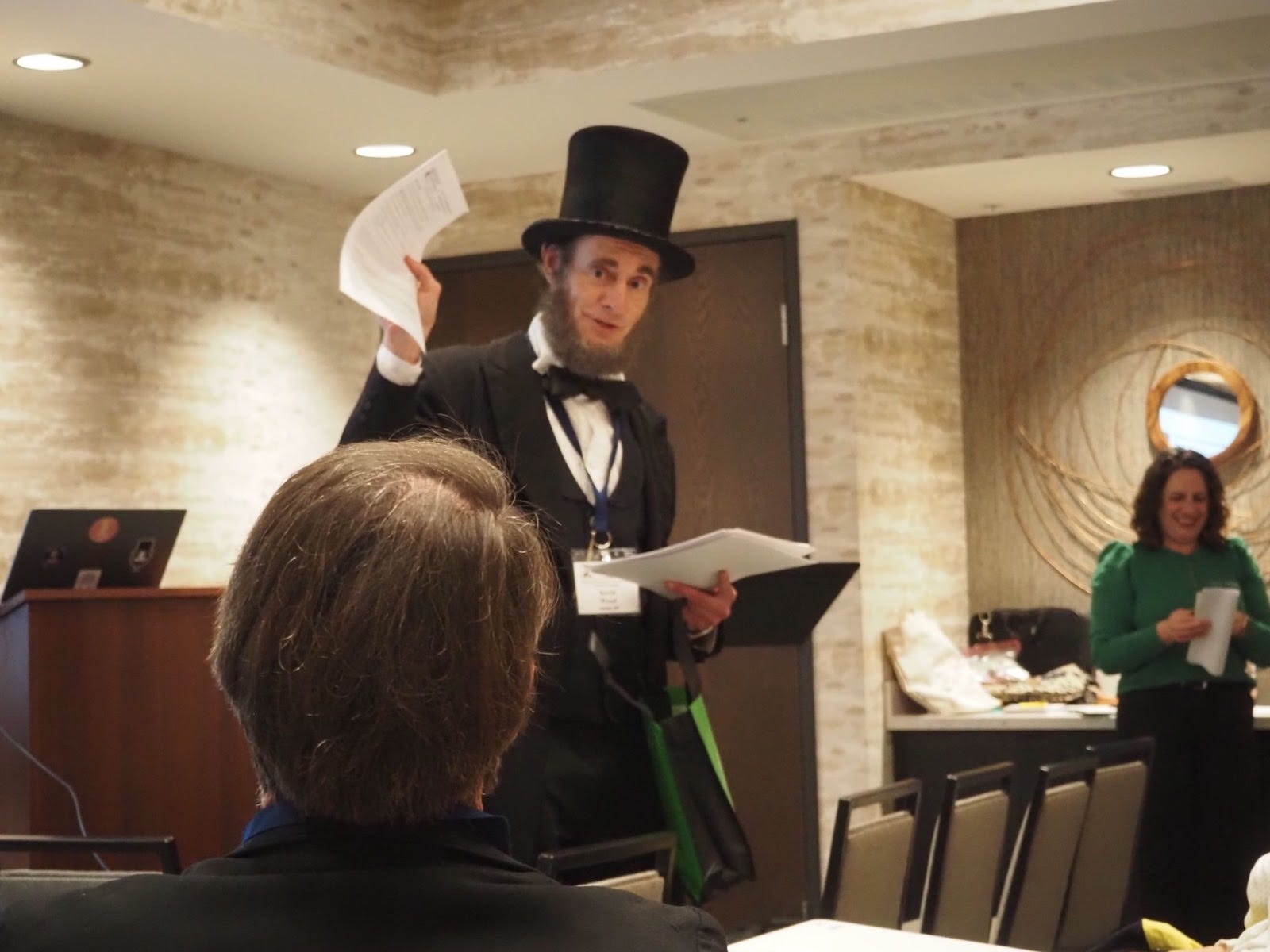
Going to Kalamazoo because Lincoln was there for a day isn’t out of the ordinary for Wood — he’s spent most of his life in places Lincoln briefly visited. He grew up in Metamora, Illinois. The town has a courthouse where Lincoln once argued a case, and Wood’s high school took trips there to learn about Lincoln.
“That was my initial introduction, if you will, to Abraham Lincoln,” he said. “Ever since, I’ve been fascinated with Lincoln, Lincoln as a person, and his very important role in our nation’s history.”
Wood took that love of Lincoln to the stage in 2000, while he was living in Philadelphia and working at the Environmental Protection Agency. His church was doing a play for President’s Day, where churchgoers would portray presidents and talk about their relationships to religion. Wood, a tall skinny guy with a beard, naturally was cast as Lincoln.
Wood said he agreed to star in the play because he remembered learning about Lincoln’s morals on childhood trips to the courthouse: the president’s “honesty, his humor, his compassion.” He figured it couldn’t hurt to toss on a costume for a day and tell a few people in a church about those characteristics he thought were so “important” for everyone to have.
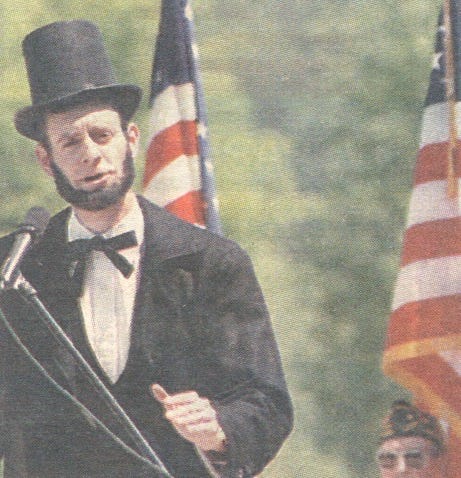
“Since I look kind of like Lincoln, I said, ‘Well, I’ll give myself a frock coat and some kind of top hat, and I’ll color my beard a little bit, and borrow some books,’” he said.
After Wood — as Lincoln — explained the president’s love of the Bible to the congregation, a local schoolteacher came up to him. She asked him to perform as Lincoln in front of her students. Wood was befuddled. He was certain that doing something as odd as pretending to be Abraham Lincoln would be just a “one and done.” But he “loved history,” so he agreed.
As he spoke to the class later that week, Wood saw how his Lincoln enthralled the students. They were “not just seeing the words, but the emotion, the feeling behind the words.”
“Students come to school every day, they read their textbooks every day, but it just doesn’t necessarily make that impact on them,” Wood said. “But doing a first person historical portrayal as Lincoln is a whole different experience.”
Wood, who was so fond of Lincoln’s religious and moral values, wanted to keep “bringing history alive” in a way “students will never forget” — so he decided to become a part-time Lincoln. While researching for the role and reading some of the “18,000 books about Abraham Lincoln,” Wood found another reason to like Honest Abe: Lincoln was worried he’d never do anything useful. In the mid-19th century, growing up on the frontier, Lincoln thought all the world’s “great work had been done.” Americans had made it out to the West. American titans like George Washington, Thomas Jefferson and James Madison had invented democratic governance. There didn’t seem to be any great role for an uneducated gangly guy from Illinois. But, of course, Lincoln managed to find some things to do.
“You think about Lincoln’s time and all that happened, and the outcome of the Civil War, the fact that we are still one nation, not two nations, the fact that now we’re on the path of abolishing slavery, all of those were things that helped to fulfill kind of the original objectives of the Founding Fathers,” he said. “That generation still had a role to play in our nation’s history.”
Wood became a full-time Lincoln to find his own “role to play.” Wood spent 2000 to 2003 at the EPA, giving an occasional Lincoln talk to local schools. In 2003, he, his wife and his two eight-year old daughters moved to Spain to work as missionaries, establishing an evangelical church and teaching English classes. He returned back to the United States in 2013 because his daughter was getting ready to start college and he wanted to be nearby. But once he was back, he had a problem: he needed a job.
“So here I’m in I’m in my late 40s, 10 years without work experience in Spain,” he said. “What kind of job could I get? Walmart, Costco, something like that. And so I said, rather than working at Walmart, I’d rather try to be Abraham Lincoln.”
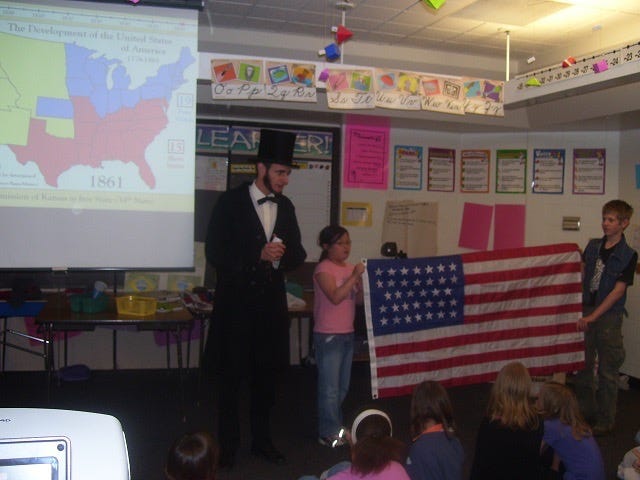
Wood started to market himself, reaching out to local schools, libraries and senior living centers about performing as Lincoln. He dug up his old top hat and suit, which hadn’t been used since he left the States, and started to dive back into researching Lincoln. He said he leaned on primary sources and Lincoln’s own writing because those first-hand accounts were more reliable than books written after the fact. Plus, Lincoln’s own words helped Wood hear the president’s voice firsthand and better capture his ethos. After “gradually building the performance up” over the course of a year and inserting more facts to better round out his speeches, Wood became a full time Lincoln presenter in 2015.
“For the last 10 years, I’ve considered myself a professional Abraham Lincoln portrayer,” he said.
Wood’s Lincoln speaks with a high-pitched, creaky voice, waving his hands up and down to emphasize his words. His voice starts high before dropping on words like “constitutional” and “Gettysburg.” He keeps his eyes as wide as possible, directing extra attention to his raised bushy eyebrows that look just like Lincoln’s. To try to add warmth to Lincoln, Wood chuckles and winks as he quips with his audience.
“I understand that our great nation, the United States of America, continues to this day? That’s wonderful, because back in my day we were having a little difficulty on that very subject of being united,” Wood’s Lincoln says in an online video preview to his presentation, clasping his hands together on the word “united.”
The first program Wood offered after going full time was a $250 one-hour overview of Lincoln’s life, titled “The Birth of Freedom” after a line in the Gettysburg Address. He’s since expanded his repertoire of Lincoln presentations, creating sets like “Lincoln as Story-Teller,” a series of jokes and anecdotes Lincoln would tell at parties; “Lincoln and Thanksgiving,” about how the president made Thanksgiving a national holiday; and “Lincoln on the Gettysburg Address.” Wood said offering multiple Lincoln presentations has made reenacting a profitable career, since venues can invite him back time and again.
“Over the years, I’ve developed different programs,” he said. “When I go back to places like libraries, senior homes, museums, then I can do different programs just to bring out different aspects of his life.”
Since Lincoln helped Wood find his own role to play, he now uses his Lincoln to help other people find theirs. In his programs, audience members often want to know “What would Lincoln think about this modern day issue?” But his Lincoln doesn’t explicitly talk about anything that happened after April 14, 1865, the night of Lincoln’s assassination, because the real Lincoln wouldn’t have been able to talk about any of that. Instead, Wood tells stories about Lincoln’s life to “make people think about things that are going on in our own time.” He said he wants to remind his listeners, whether fifth graders or senior citizens, that there’s always work for them to do to improve their country.
“Every generation has a part to play,” he said. “Every generation in this country still has something to do for the continued development of our nation.”
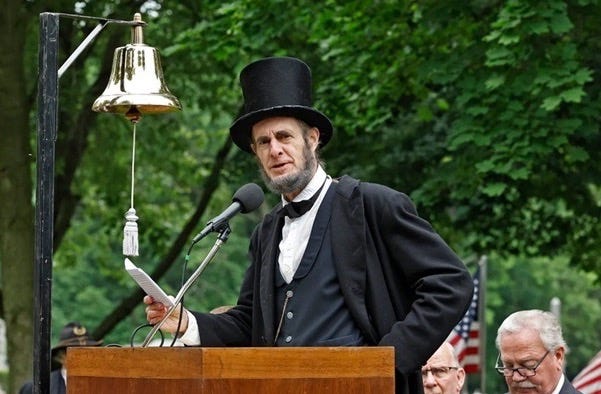
For example, Wood said when he talks about the Emancipation Proclamation, he calls it a “temporary war measure” that a future president could have wiped away — just like, Wood explains, “what you call an executive order.”
“I know you can’t imagine a situation where one president issues an order and the next one comes behind it undoes that,” he said, embodying his sarcastic Lincoln. “I remind people about the past, and everyone’s going to have their own take on that. So I do say things about current events, but I don’t directly talk about them.”
Wood said he strikes that balance because he wants people in the present to know “there’s really nothing new under the sun.” He said he wants to use Lincoln’s struggles to give people context to handle their problems today.
“We kind of forget that no past generations live their own experiences, and those experiences were just as alive to them as they are, as ours are to us,” Wood said. “They had the same emotions, the same feelings, the same thoughts as we did. It’s just a different context, but it’s all just as alive, just as important as ours is.”
Sometimes, though, students don’t care about broad historical narratives — they just want to know about Lincoln’s kids. Once, when he was speaking to a second grade class, a little girl asked him, “Mr. Lincoln, how many of your boys lived to the age of adultery?”
“I’m trying not to laugh, because I know what she meant,” he said. “I wanted to say, ‘I hope none of them.’”
Those misconceptions are less common when Wood is with Abes. He joined the Association of Lincoln Presenters in 2002, and started going to conferences in 2015 after he became a full-time Lincoln. He said getting to be around other Lincolns and learn the stories they tell helps him fill out his own tales — including, of course, the puzzle of what Lincoln was doing in Kalamazoo.
“Once a year to be able to get together with other Lincolns and learn from them, talk to them, compare notes, that’s a great way to learn,” he said.
The day after Wood’s Lincoln trivia game, he and the other Abes were ready to learn. The conference attendees gathered in the lobby of the Kalamazoo Valley Museum. Half the group was in full Lincoln attire, though even the contemporarily dressed Abes rocked bushy beards. Two Lincolns sat off to the side on their “portable telegraph machines.” A museum tour guide emerged from a back office and told everyone they’d be walking through the museum to see an artifact from Lincoln’s Kalamazoo visit. After, they’d all go to a lecture hall and learn more about that one day journey. A woman who walked by the group looked on, dumbfounded, before whispering to her husband “I love it.” A man leaned over the railing on the floor above to take photos.
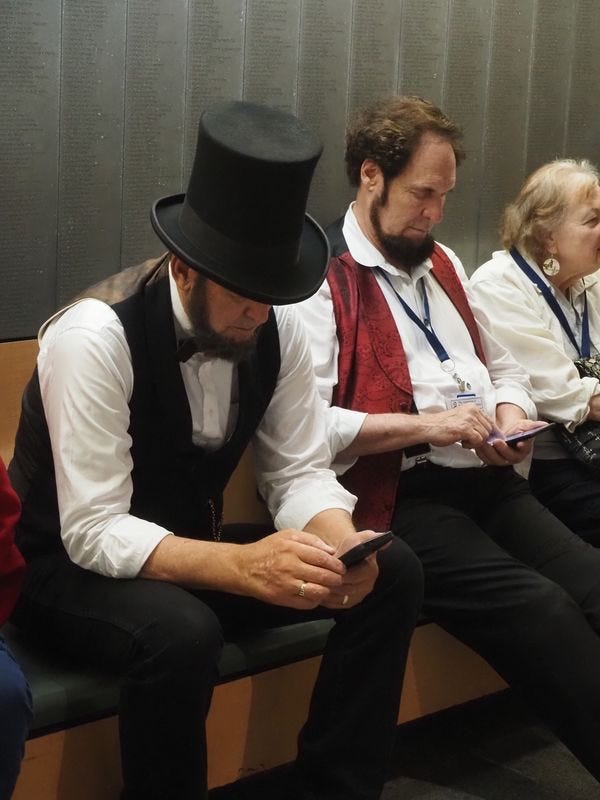
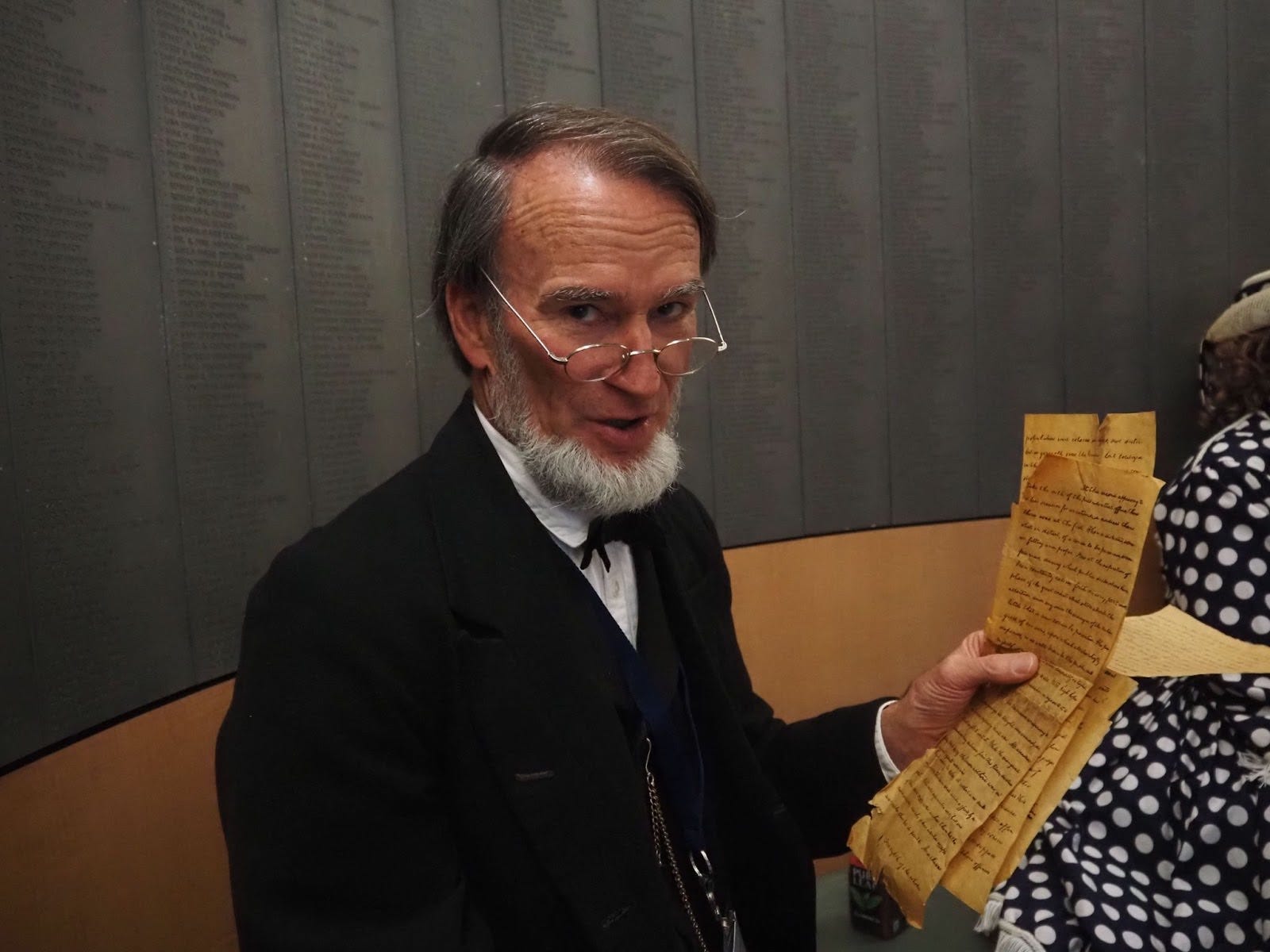
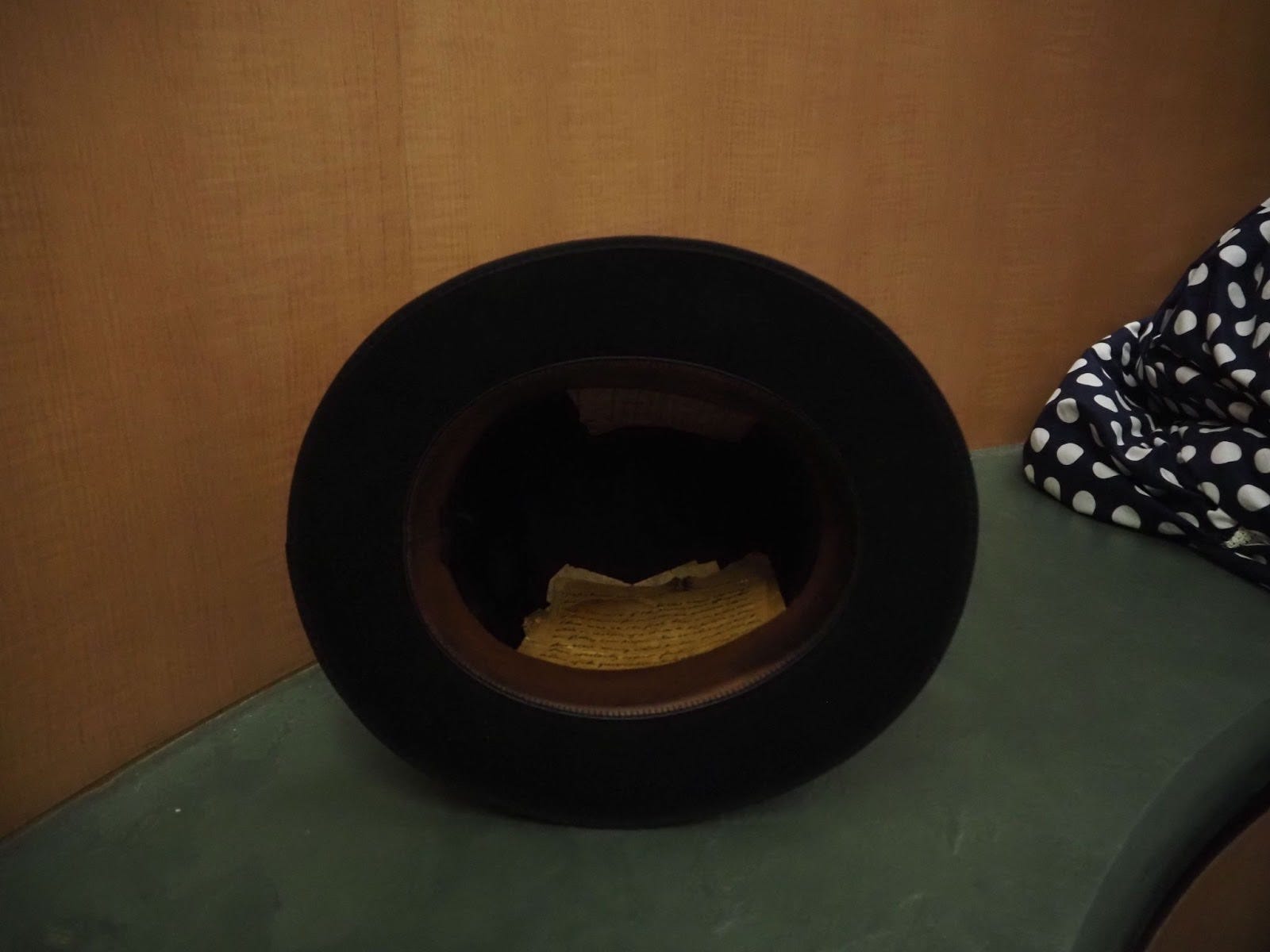
John Voehl, a Lincoln from Littleton, Colorado, sat on a bench in the corner of all this action. Voehl had taken his top hat off, and a couple sheets of weathered paper were visible inside the garment. Like Lincoln did with his papers, Voehl carries copies of the Gettysburg Address and Second Inaugural Address in his hat — purely, he hastened to say, as props. He has the speeches memorized.
After the tour guide signaled for the Lincolns to go upstairs, Voehl put his top hat back on and crammed into the elevator with a handful of other Abes. They went up to the third floor to see the Kalamazoo Valley Museum’s star attraction: a desk that Abraham Lincoln wrote some letters on when he visited town.
Or, maybe, the Lincolns were all looking at a desk that Abraham Lincoln didn’t write any letters on. The tour guide explained the desk was in the house where Lincoln stayed in Kalamazoo. Lincoln probably wrote some letters while in town, the guide continued. But we have no way of knowing if he actually did, much less if he wrote them at the desk. The object’s owner simply claimed Lincoln had written there, and everyone decided to believe them. The guide, a spry if quiet mid-20s man, told the Lincolns that what really mattered was if “you think Lincoln used this desk.”
After 15 more minutes of desk talk, the guide summed up the discussion: “It makes for a very interesting debate: did he use it, or did he not?”
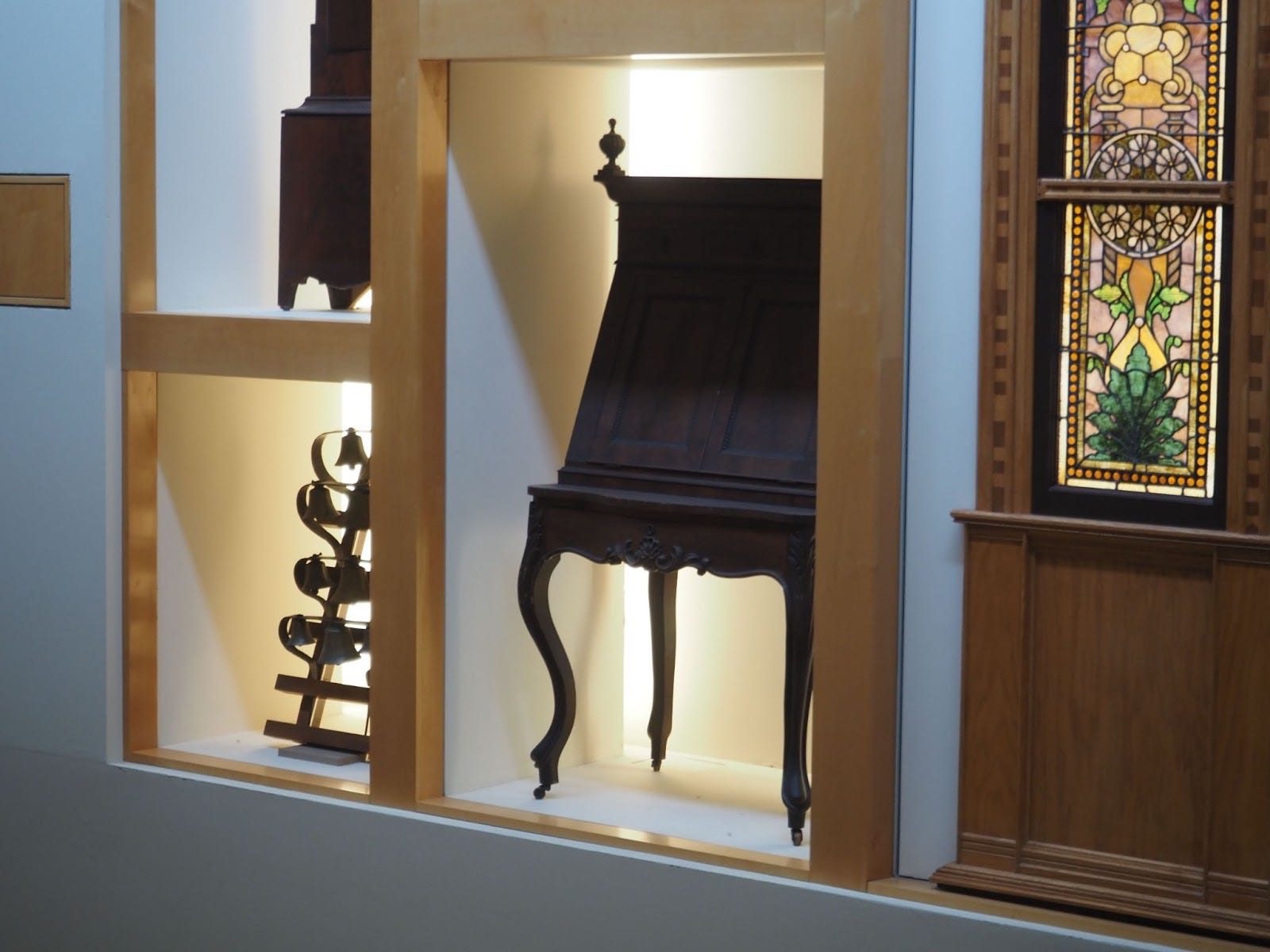
Voehl and the other Lincolns took another glance at the desk, and seemed a bit befuddled about what their takeaway should be. Voehl piped up with the only fitting response: “Well, maybe.”
The gaggle of Abes then descended the elevator and made their way into the museum’s theater to hear a talk from Tom George, a local Lincoln expert.
“Lincolns in the theater…always dangerous,” Kevin Wood muttered as the group filed in.
George was there to answer the question of the conference: why did Lincoln come to Kalamazoo? He explained that Lincoln had traveled there as a favor to a state senator whose vote for U.S. Senate he needed. George also unveiled that while in Kalamazoo, Lincoln had tea with Eliza T. Waldridge — the owner of the desk upstairs.
“That lends support to the idea that Lincoln did use the desk,” he announced.
After George left the stage, Voehl went on. He was set to moderate a “bull session,” a free-ranging conversation with the other Abes about the nuts and bolts of being a Lincoln. Voehl settled at a table alongside Teena Baldridge, a Mary Lincoln presenter serving as Voehl’s co-moderator. The theater lights dimmed and a spotlight came up right on Voehl.
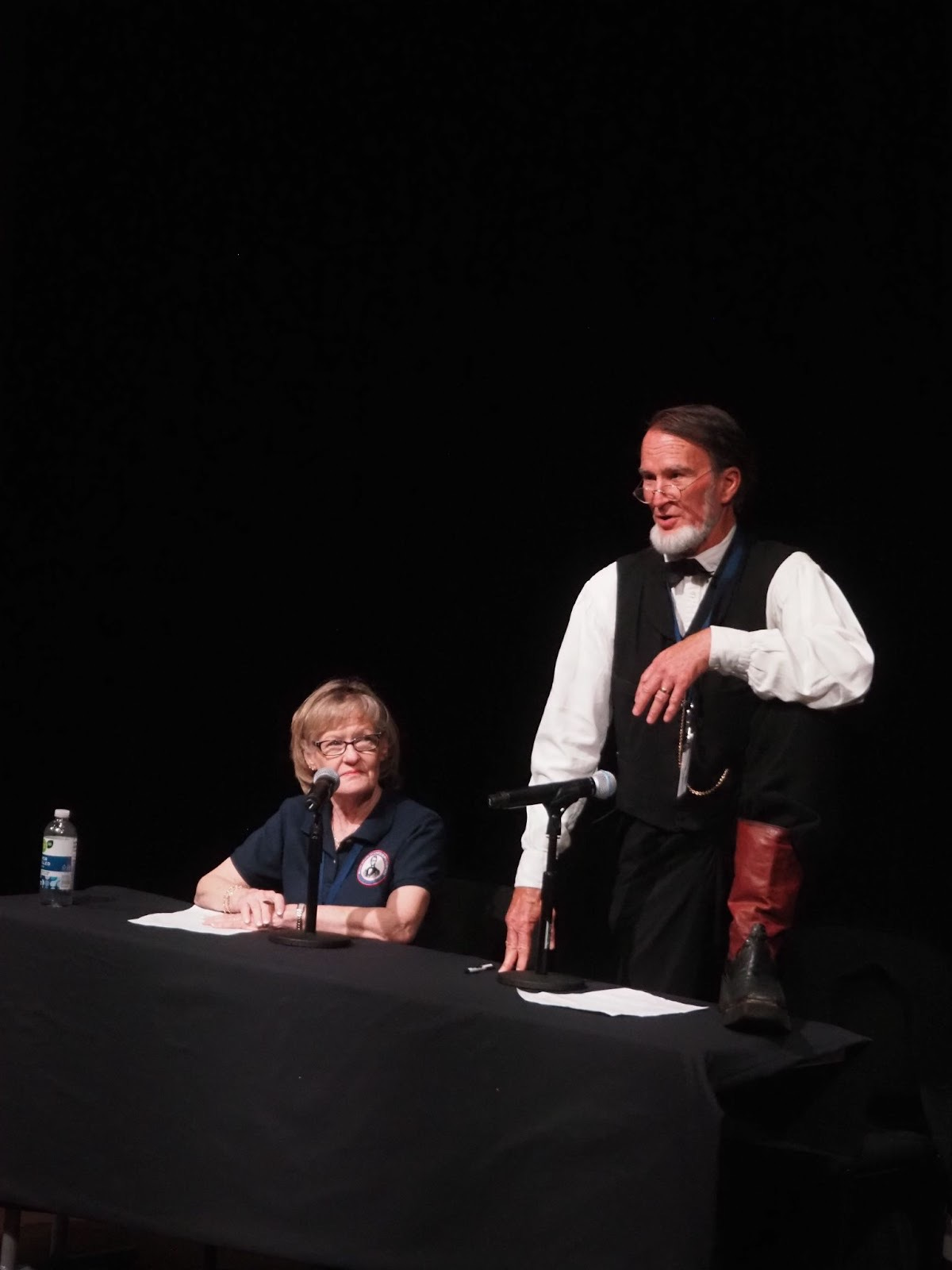
“Let’s start with how to become Lincoln,” he said, raising his red square-toed boot onto the stage to show off how authentic his costume was. The eyes of 20 other Abes settled on the highlighted Lincoln on stage.
Voehl became a Lincoln so he could get on stage and be a “rock star.” In 1996, Voehl was an aerospace engineer at Lockheed Martin in Denver. One of his co-workers was a Cub Scout master at a camp that was planning a skit about “Bill & Ted’s Excellent Adventure,” a 1989 time travel film in which two high schoolers kidnap historical figures to help them out with their school presentation. The last “dude” they bring along is Abraham Lincoln. Voehl’s friend needed a Lincoln for his skit, and asked the bearded, skinny, tall Voehl to assist.
“He looks at me and says, ‘You would make a good Lincoln,’” Voehl said. “I owed this guy a big favor, so I said, ‘Well, sure.’”
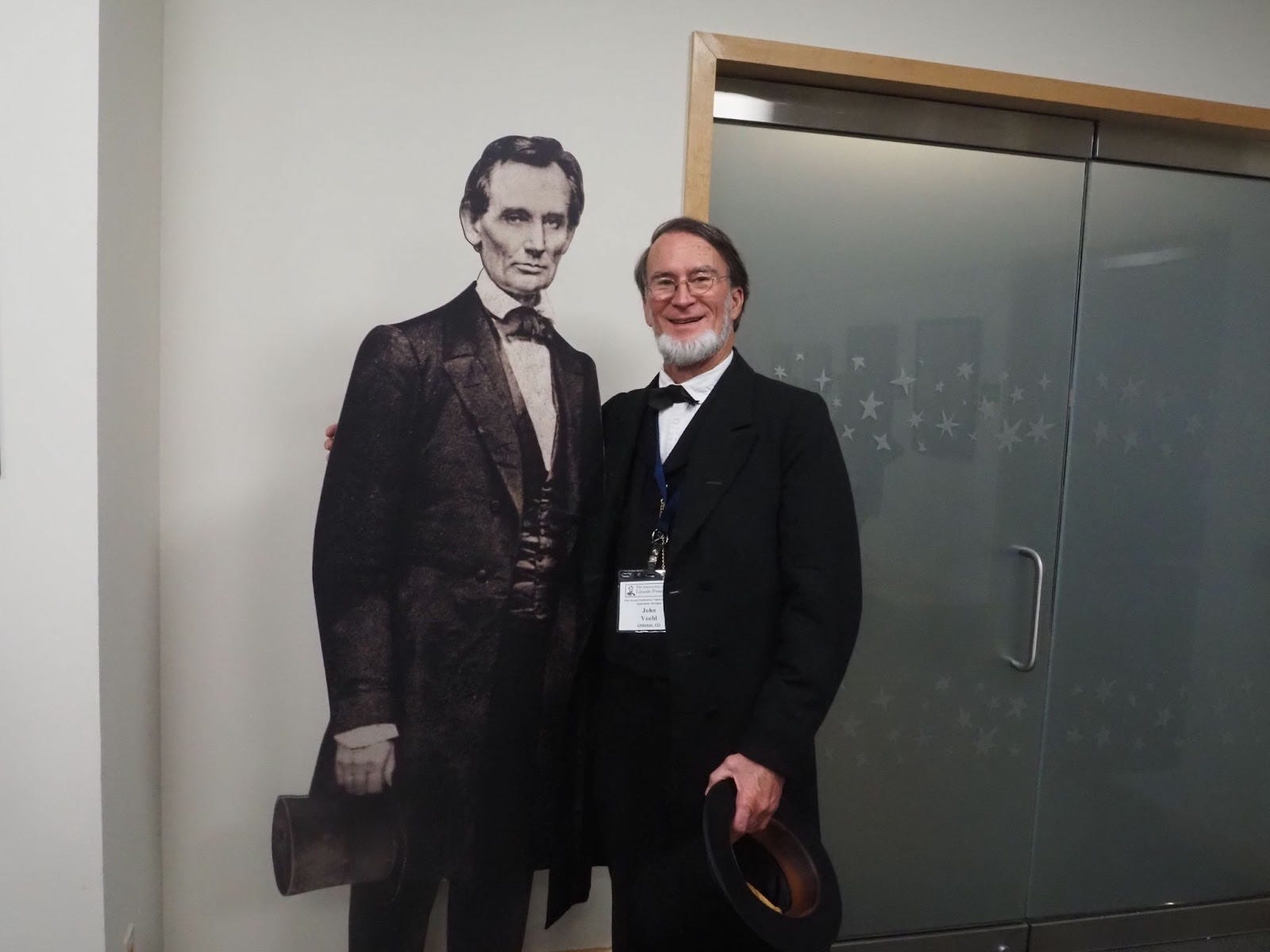
Voehl went to a costume store and picked out a cheap Lincoln outfit. On his way home, he stopped at a video store to rent a copy of “Bill & Ted” and learn his lines. He was supposed to deliver a monologue taken from the movie’s concluding presentation, in which all the characters Bill and Ted collected on their excellent adventure recap their own lives.
At the camp, before Voehl took the stage, scouts wrestled while Joan of Arc spoke, and they talked among each other over the philosophy of Socrates. But then Lincoln walked out. The entire camp sat still with their jaws agape, staring at Abe.
“Bill and Ted, these two great gentlemen are dedicated to a proposition which was true in my time, just as it’s true today: be excellent to each other, and party on, dudes,” Voehl’s Lincoln said at the show.
Voehl walked off the stage, and campers mobbed him. One boy told Voehl he “thought you were dead.”
“I had no idea that the character of Lincoln had this kind of rock star charisma with people,” Voehl said. “We’re driving home, and my wife says, ‘If something like this could occur, for a funny skit thrown together at the last minute. I wonder what would happen if you really studied and prepared for this.’”
Voehl wondered that, too. Until he became Abe Lincoln for a day, Voehl had spent his whole life toiling in corporate aerospace engineering offices. The spotlight performing Lincoln let him into “blew [Voehl] away.” He’d never been universally beloved, or seen as the “number one or number two” among his peers. Voehl wanted to preserve that adoration by embodying Lincoln.
“He is an astounding American, and I wanted to become him,” Voehl said.
Between the summer of 1996 and President’s Day in 1997, Voehl studied Lincoln around the clock, assembling a database of all the information he could find. As he learned more about Lincoln, he discovered more of Lincoln’s admirable qualities. For instance, Lincoln, unlike Voehl, had a great sense of humor.
“Tapping into Lincoln’s humor was a big challenge for me. I’m more of a serious person. I’m the one of those guys in the room, somebody tells a joke, and I might not even laugh or smile when the punchline comes along,” he said.
To bridge that gap, Voehl memorized Lincoln’s quips. When Lincoln was traveling to Gettysburg, for example, he was annoyed that the press wouldn’t stop talking about the war’s negative aspects. After reading one article, he joked to a companion that he wished reporters would be more like one man who dropped to his knees in a thunderstorm, begging for “a little more light and a little less noise.”
“Someone might have asked him a question or made a comment, and it took his instant recall to something that happened when he was a child, to come up with a story,” Voehl said. “The story itself has nothing to do with the current situation. It is only the punchline at the conclusion of the story that matches the current situation.”
Even as he studied, Voehl still needed to find a way back onto the stage. Summer camps don’t last year round, after all. Many of Voehl’s friends’ wives were teachers, so he begged them to let him come and perform as Lincoln. Eventually a kindergarten teacher relented. Voehl went to speak at a school assembly, cramming every fact he knew about Lincoln into the presentation.
“At that point, after I added everything in there, I didn’t know much more than what I actually told them,” Voehl said.
After he finished his half-hour spiel, one girl in the crowd asked Voehl if Lincoln had ever met a little girl, Grace Bedell, who wrote to him to suggest he grow a beard. Voehl — as Lincoln — said he didn’t think so. The girl came up to Voehl after the presentation with a book on Lincoln that proved him wrong.
“The girl showed me in her book how Lincoln had this train go through Grace Bedell’s small town in upstate New York and met Grace on his way to the White House to be inaugurated as the 16th president,” Voehl said.
After that discovery, Voehl decided he had to keep learning. He wanted to keep audiences fixated on him, and to leave no question unanswered. He read more Lincoln books, looked into more Lincoln archives, investigated everything from the president’s campaigns to his relationships with Native Americans. He ordered a more “authentic” outfit, tailoring the black broadcloth coat and top hat to Lincoln-era styles. Voehl said that after a year, he had way too much information to cram into a single program, so he started adding more specialized presentations to his repertoire.
“I started adding different presentation topics, all Lincoln in the first person, and now I have about 90 of them,” he said.
Though Voehl created new presentations and kept doing Lincoln research, he didn’t become a full time Lincoln presenter until 2013. He performed in his spare time, advertising himself online and writing up new programs as a hobby. He didn’t have time to “be his own agent” and set up bookings because he was still committed to his aerospace career. He refused to “cheat my boss by trying to make phone calls and stuff at the same time that they were paying me.”
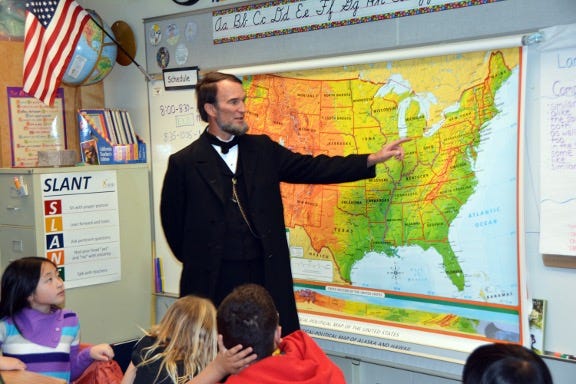
But after he retired in 2013, Voehl started making calls, and people started answering. He developed a loyal customer base at nearby schools. Each year, he gave the same presentation, an overview of Lincoln’s life, to a new crop of students. His basic school program, which costs $250, covers Lincoln’s role in the Civil War, complete with show-and-tell props such as Lincoln logs.
“Part of their curriculum is to study the Civil War, and they know that towards the end of that time that Lincoln is going to come,” he said.
Voehl’s Lincoln looks old, his forehead shriveled up and his spectacles barely hanging onto the edge of his nose. He speaks in a contemporary cadence, rather than trying to mimic Lincoln’s mannerisms. His jet black suit and bow tie make his well-combed beard appear almost white.
“America will soon elect a new president,” Voehl’s Lincoln said in a video presentation about campaigns. “Being a leader is not easy. They must make hard decisions for our country.”
Aside from schools, Voehl’s main customers are high-end retirement homes, where he’s forced to dig into his presentation repertoire to keep the bookings and interest coming year after year. Voehl said nursing homes have enough money to afford him, and their residents love seeing him, so he goes back to the same ones annually, always with a new speech in hand.
“If I get in there once, usually their residents tell the activity director that they want more Lincoln,” he said.
Voehl said he’s performed at some venues as many as 20 times. He never gives the same presentation to the same audience, diving into Lincoln’s views on everything from baseball to the Kansas-Nebraska Act. He performs nearly every day, mostly around Denver unless he happens to be traveling somewhere else.
Voehl said he sometimes develops programs for specific audiences. For example, when Voehl still worked for Lockheed Martin he went on a business trip to Huntsville, Alabama, around the holidays. He contacted the local library and asked if they’d like to have Abe Lincoln come by over the weekend. The librarian agreed, but only if Voehl would match the winter spirit and talk about Lincoln’s relationship to Christmas — something Voehl knew nothing about.
“I said, ‘Sure, no problem,’” he said. “I walked away. And I thought, ‘What in the world am I going to do about Lincoln and Christmas?’”
Needing to ensure he kept his spotlight and audience, Voehl logged onto a computer and started studying, piecing together a narrative about how the Lincolns spent Christmases from 1860 to 1864 “celebrating, giving, working to save the country.” He mentioned in his spiel that cartoonist Thomas Nast drew Santa Claus visiting union soldiers in 1863. Lincoln supposedly thought Santa was “the best recruiting sergeant the North ever had.”
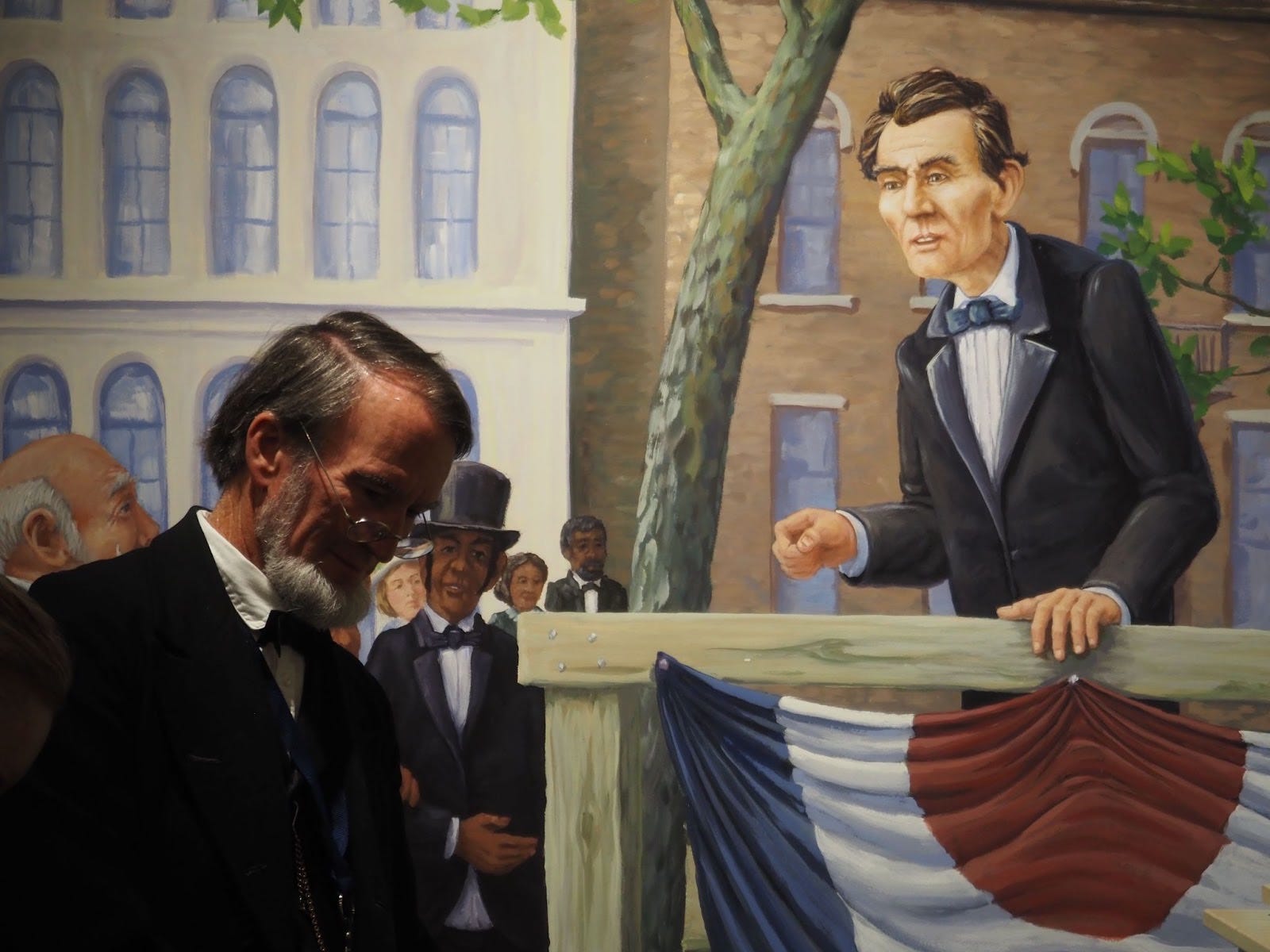
Voehl has also wound up in the spotlight among his fellow Lincolns. In 1997, he visited Ford’s Theatre, the site of Lincoln’s assassination, prepared for a full day of Lincoln revelry. His wife had different ideas.
“I was ready to go to Ford’s Theatre in costume as Lincoln and my wife said, ‘No way, you’re not doing that,’” he said.
But like any good Union commander, Voehl won that battle and went to Ford’s in full Lincoln attire. He spent half an hour badgering the park ranger on duty with questions about Lincoln’s life, and got “a little deeper than that person’s knowledge.” The ranger put Voehl in contact with the on-site Ford’s Theatre historian, Michael Maione.
“He and I talked for a couple of minutes, and apparently I passed his litmus test for being a serious student of Lincoln, and he invited me upstairs to the offices of the Park Service,” Voehl said.
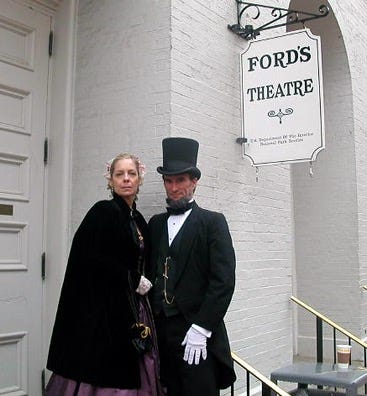
The two discussed Lincoln’s assassination, and Maione’s theory that the Confederate government backed John Wilkes Booth’s efforts, an idea Voehl “didn’t even know about.” After a couple hours in which Maione shared “an avalanche of information,” the extra-educated Lincoln wandered outside.
“The theater guard at the front door said, ‘Uh oh, here comes another group of Lincolns,’” he said.
Voehl was puzzled — until he looked across the street and saw dozens of Lincolns pouring out of a passenger van and walking into Ford’s Theatre. Voehl followed them back into the museum in the theater’s basement, and asked why they were there.
“I found out that they are part of the Association of Lincoln Presenters, and I got a business card from one of them and found out that they had their annual convention up at Gettysburg, and this was like a side trip,” he said. “They explained to me that they were supposed to meet with the resident historian, Michael Maione, but somehow somebody else took up all of his time.”
Voehl, embarrassed, shared everything he and Maione had discussed. At the end of their conversation, he asked to join the Association. Two and a half decades later, he’s become the star Lincoln he always wanted to be, instructing other Lincolns about how to master their craft.
“There’s a bunch of topics that the Lincolns want to talk about, you know, how do you get into schools? And how much should you charge for a presentation? Things like that, so because so many people have watched me as a Lincoln I’m moderating that discussion,” he said.
Voehl and the other Lincolns spent an hour in the theater discussing the nuts and bolts of Lincoln presenting: how to accept payments, whether to file as an LLC, where they look for new material, and where to find the best person to tailor your Lincoln suit. After the discussion wrapped up, the Lincolns filed back to their hotel for an evening Civil War Ball. The Abes put on their full outfits, top hats included, while the dozen Mary Lincolns present adorned themselves with poofy pastel pink, blue and yellow hoop dresses.
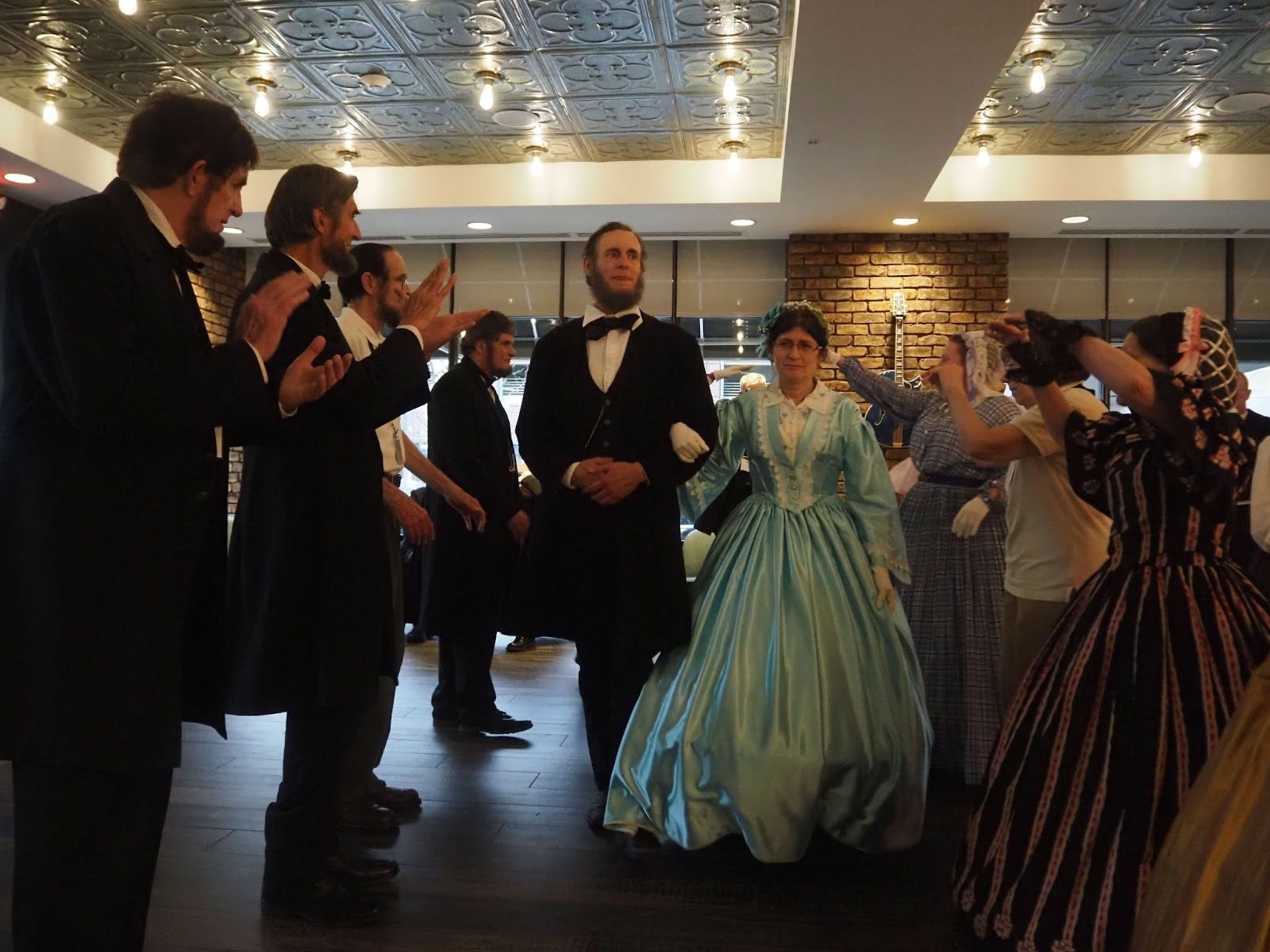
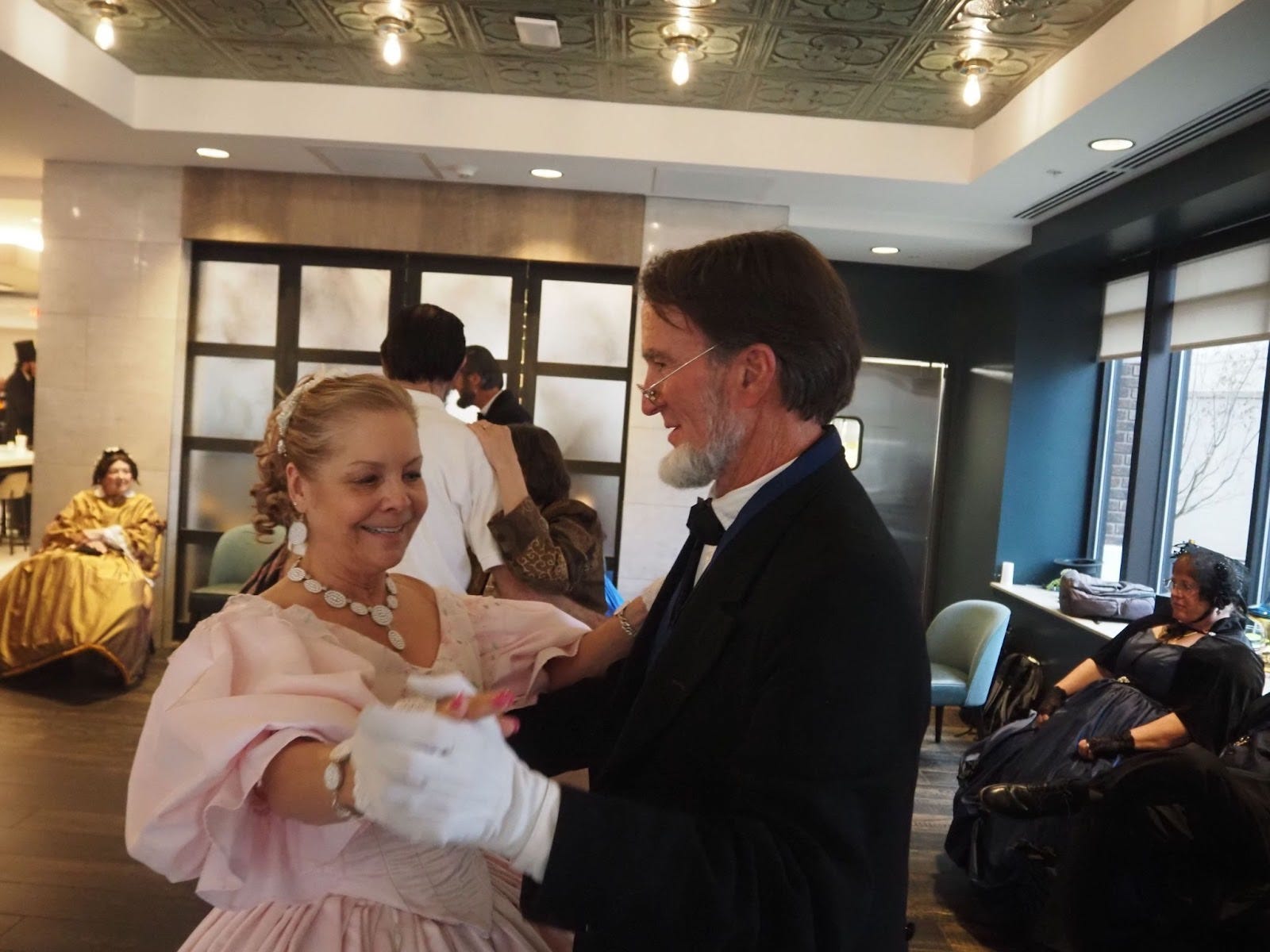
The group shoved aside the tables and chairs in the restaurant of the Hilton Garden Inn where they were staying to form a small dance floor. One of the Abes took up the role of dance caller, and led the group in slow waltzes and line dances from the 1800s. Five Marys and Abes hit the floor, while other attendees sipped white wine and smiled at the revelry from their seats. One Abe struggled to learn how to do si do during a square dance, and a Mary admonished him for almost stepping on her dress.
Kevin Wood’s wife, Joanne, was at the dance in an 1800s-style light blue dress. She was present just to support her husband — she doesn’t portray Mary Lincoln or any other historical figure. At her urging, I wound up participating in a “chain dance” — essentially, a line dance done in a circle. After I stumbled through the sashays and backwards steps for what felt like half an hour, the dance mercifully concluded. Joanne joked to me that I’d probably never find myself dancing with a bunch of Abe and Mary Lincolns again.
But Dennis Boggs, who sat on a chair in the room’s corner, wants to find himself around other Abe and Mary Lincolns as often as he can.
Boggs, a Lincoln from Nashville, spent his childhood in public housing, and dropped out of high school at 16 to help support his mother. In 1964, he moved away from his hometown of Jackson, Tennessee, to Nashville and started working in the retail grocery business. Two decades later, he decided he needed a hobby, and started doing local community theater.
“I got involved in a lot of community theater very late in my life,” he said. “I did eight musicals. I can’t sing or dance, but I played all kinds of characters.”
One of those characters was Lincoln. In 1990, a director at the Tennessee Performing Arts Center asked him to be Lincoln in a new play he’d written, “Abraham Lincoln and the Songs He Loved.” The play was a jukebox musical with Lincoln’s favorite tunes and writings interspersed. (As best I can tell, Boggs might’ve been the only person who loved Abraham Lincoln’s songs. There’s no online record of the play existing outside of references from Boggs in other interviews.)
“Lincoln loved ballads,” Boggs said. “We had a narrator who introduced the song to the audience and gave a little history of the song. Then we had a guitar player, a banjo player and a girl singer, and they would do these songs, and I would sit stoically in a chair. And at the end of each song, I would rise, and deliver some Lincoln speeches and a few letters.”
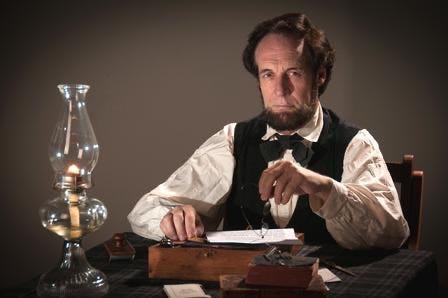
Boggs had a large bushy beard, and the director thought with a little grooming the amateur actor could become the Great Emancipator. Boggs agreed to star, happy to have a role that didn’t involve him stumbling through a dance number. But the director’s offer came with a warning: Boggs wouldn’t just be playing a part. He’d have to really become Lincoln.
“He was just going to be another character that I did on the stage,” Boggs said. “The director cautioned me: This is not the figment of a playwright’s imagination. This was a real man.”
Boggs knew very little about the president. He remembered that Lincoln grew up in a log cabin, was president during the Civil War and was assassinated. But since Boggs dropped out of school at the age of 16, that was all he knew.
“I was not much of a reader: TV Guide was about as far as I went,” Boggs said. “But since I was going to be Lincoln, and I was going to be using Lincoln’s words, I cracked the books open.”
As Boggs started to read, he saw some of himself in Lincoln: they both grew up poor, without much real education. Lincoln became a self-taught lawyer from reading legal texts. Boggs also wanted to improve his life via reading — about Lincoln.
“If you can find something in that story that you can personally relate to, then you will begin to feel more and more and more like Abraham Lincoln,” Boggs said. “I’m sitting in my office right now, all four walls are full of books, and they’re all about Lincoln.”
At one performance of his play, Boggs stood on stage and read from Lincoln’s letters, quoting an 1863 note to James C. Conkling: “Still, let us not be over-sanguine of a speedy final triumph. Let us be quite sober. Let us diligently apply the means, never doubting that a just God, in his own good time, will give us the rightful result.”
The man who would give Boggs the rightful result was sitting in the audience that night: Jim Sayre, a Lexington-based Lincoln. Sayre, whose weathered eyes and stout nose made him “look exactly like Abraham Lincoln,” told Boggs, “Young man, we need you in our group.”
“I said, ‘What group is that?’ He said, ‘The Association of Lincoln Presenters,’” Boggs recounted.
Boggs “didn’t do anything then” because he didn’t expect to be a Lincoln presenter after his play wrapped up. But that September, he got a letter from Sayre congratulating him on his acceptance to the Association of Lincoln Presenters — Sayre had signed him up without needing a “yes.” Sayre also invited Boggs to come to Lincoln’s hometown of Hodgenville, Kentucky, the next month to compete in the town’s annual Lincoln lookalike contest.
“Enjoy two days of history, heritage, and hospitality in the birthplace of Abraham Lincoln and learn why readers of Kentucky Living Magazine have chosen Lincoln Days as Kentucky’s Best Festival for four consecutive years. Lincoln Days is a two-day festival in Abraham Lincoln’s birthplace featuring pioneer games, an art show, Lincoln Look-Alikes, a parade, live music, food booths, an ice cream eating contest, the 5k and 10k Railsplitter Run, a classic car show, activities for kids and families… and much more!” (Lincoln Days)
“That’s where Lincoln was born,” Boggs explained. “They close the town down every October for a weekend of ‘Lincoln Days.’ So Jim asked me to come up and take part in a Lincoln look alike contest.”
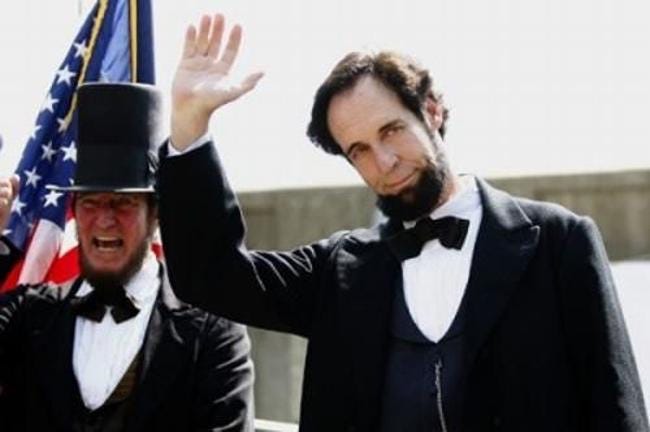
Boggs figured that, with his theater background, he could give a convincing enough speech as Lincoln, so he took Sayre up on his offer. He and his wife made the trek to Hodgenville, burning through a couple tanks of gas. When Boggs arrived in town and disappeared into Abraham Lincoln, well, the audience might not have been able to tell: the two sounded more or less the same. Boggs spoke with his low southern drawl when he performed, but with an added verve, emphasizing words like “fathers” and “continent” to make himself sound like a more seasoned public speaker. His hair fell behind him into the beginnings of a mullet, while his rectangular jaw and massive shiny forehead made him easy to mistake for a wax museum model of the former president. Boggs’ Lincoln-like face paid off: he won the contest.
“It was just fabulous,” he said.
Boggs got $100 for winning. Little did he know, he’d badly need that money. A few weeks after the contest, the grocery store where he worked went bankrupt. Boggs figured he should just go work at a new grocery store chain, and keep bagging food for the rest of his days. His wife disagreed.
“My wife said, ‘Why would you do that?’ And I said, ‘Well, I need a job.’ And she said, ‘I think you have one: be Lincoln,’” Boggs recounted.
Boggs decided to give it a shot. He bought more books about Lincoln and collections of the president’s stories and speeches. He tried “to start reading everything you can read that Lincoln himself wrote,” hoping to understand how Lincoln spoke and what he cared about. Boggs said he avoided biographies about Lincoln because, well, Lincoln avoided them.
“Lincoln said a biographer, that’s a fella that writes about another fella’s life,” Boggs explained. “He said, ‘They do a great job. But what they don’t know about the character, they just make that up.’”
He said he started trying to “market” himself in the simplest way possible: asking schools, churches and libraries if they want to hear a 45 minute presentation about Lincoln’s life from Lincoln.
“I don’t have any marketing experience,” he said. “I don’t have an agent. I just answer the telephone and answer my email.”
Boggs said his basic one hour presentation, for which he charges $300, is made up of “90 to 95% Lincoln’s own words,” with Boggs interjecting his own writing only in his introduction and transitions.
“I’m very lucky,” Boggs said. “I do not have to write my own material, it’s just there for me.”
Boggs has spent the last three decades on the road as Lincoln, traveling from coast to coast and speaking with everyone from preschoolers to Civil War reenactors. He might have looked a lot like Lincoln when he started, but in recent years the resemblance has faded. He’s still always “flattered” when people say he looks like Lincoln, but he’s put on more weight than the famously skinny president. It’s harder to pick him out of a crowd as an Abe now.
“If I don’t lose a little weight, I’m going to have to start doing Taft,” he joked.
The look has never been central for Boggs, though. His Lincoln mentors taught him that the mind under the top hat matters more than the top hat itself. When he dressed like Lincoln, Sayre once told him, people would “automatically assume that you know what you’re talking about.” That trust meant he had to know everything there was to know about Lincoln in order to live up to the “honor” of telling the president’s stories.
“I’m not an exact duplicate of Abraham Lincoln,” Boggs said. “But I would like to think that Lincolns, like me, are honored to take on this persona and teach and learn about him.”
Boggs said he thinks the late Dan Bassuk, the Association of Lincoln Presenters founder, would have agreed with him. Boggs met Bassuk at the 2004 Association of Lincoln Presenters conference after only speaking to him on the phone. While hanging his coat up, Boggs heard Bassuk say, “Well, Nashville’s Lincoln finally came to a convention.”
“I turned around and he was like five foot six, bald headed,” Boggs said. “He looked absolutely nothing like Abraham Lincoln. But he knew Abraham Lincoln backwards and forwards, and that’s why he was a great Lincoln.”
Boggs’ love of Lincoln extends to the many men underneath similar looking beards today. After 30 years of performing, he’s become a “senior Lincoln” offering advice to others. A few years ago, a younger Lincoln asked how he could get more work in the field. Boggs’ solution was simple: learn more about Lincoln.
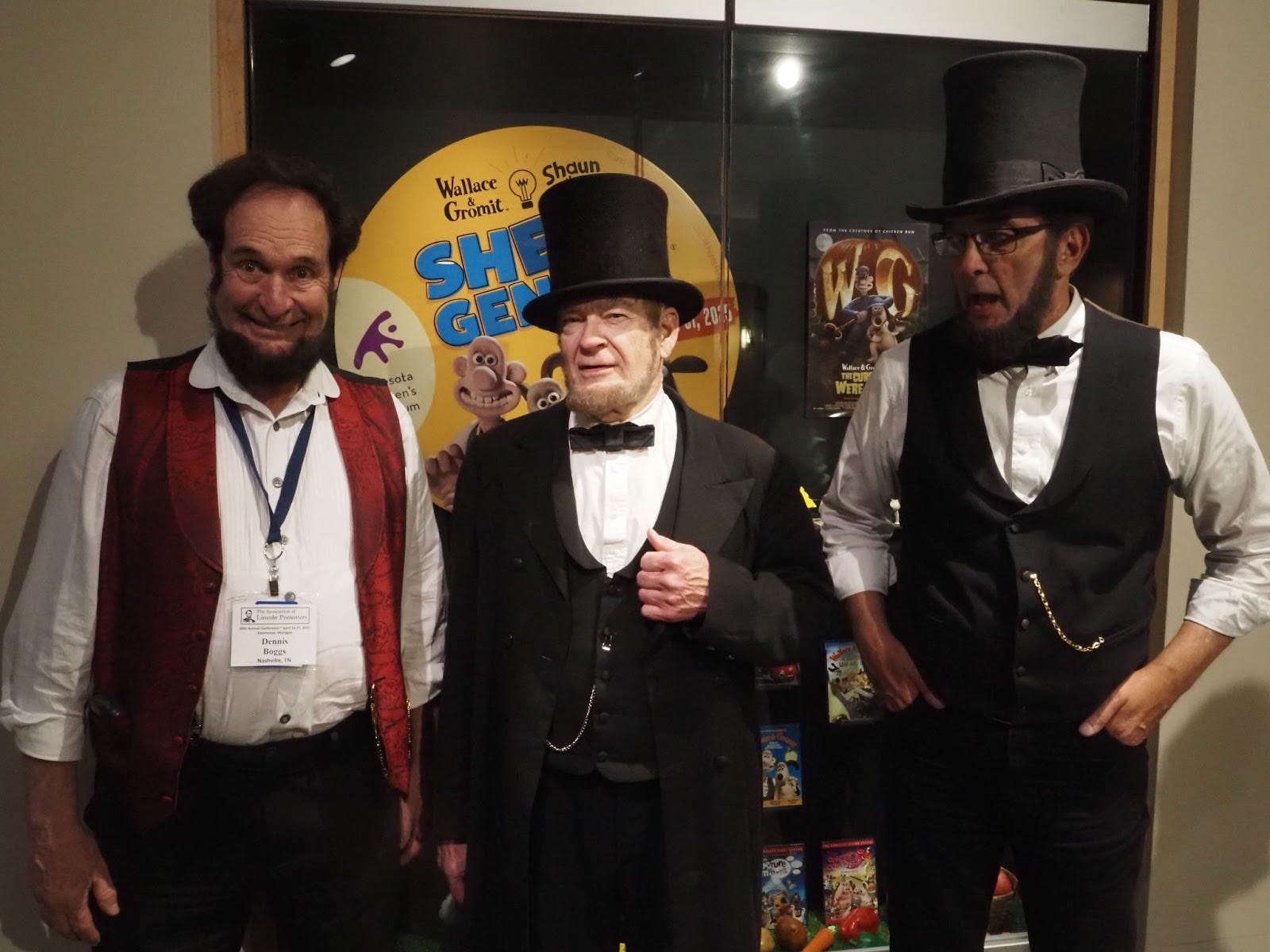
“He said, ‘Do you have any suggestions?’ And I said, ‘Yes, hone your craft,’” Boggs recalled.
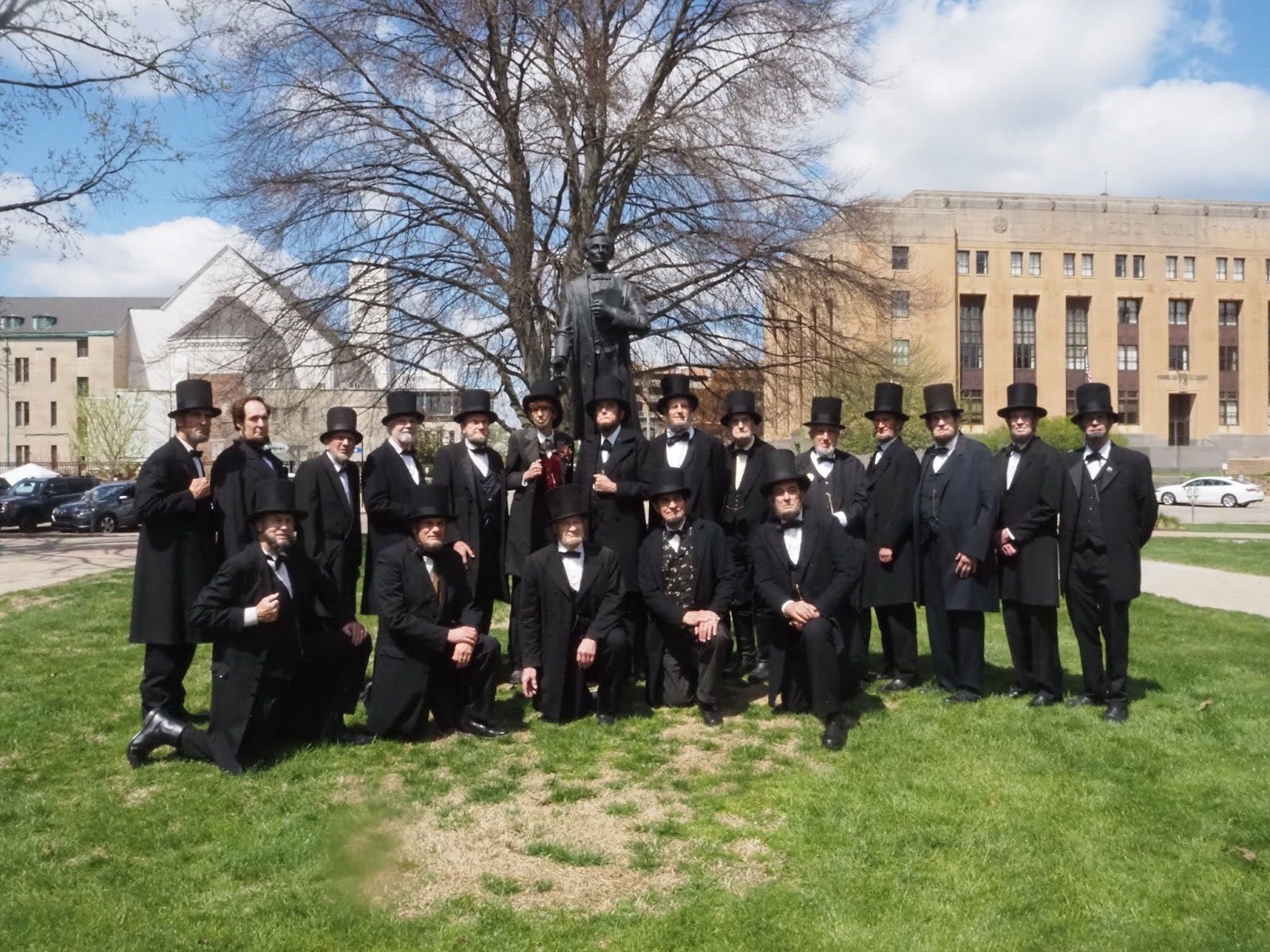
On the conference’s last day, Boggs found himself surrounded with Lincolns who had honed their craft. The Association was gathered in Kalamazoo’s Bronson Park, where Lincoln had delivered his speech for Fremont in 1856, to take their annual group photos. The gaggle of Abes started to fan out across the park as soon as they entered. One took out a pipe to smoke, while a particularly frail Lincoln sat with someone in Civil War soldier attire on a bench to rest.
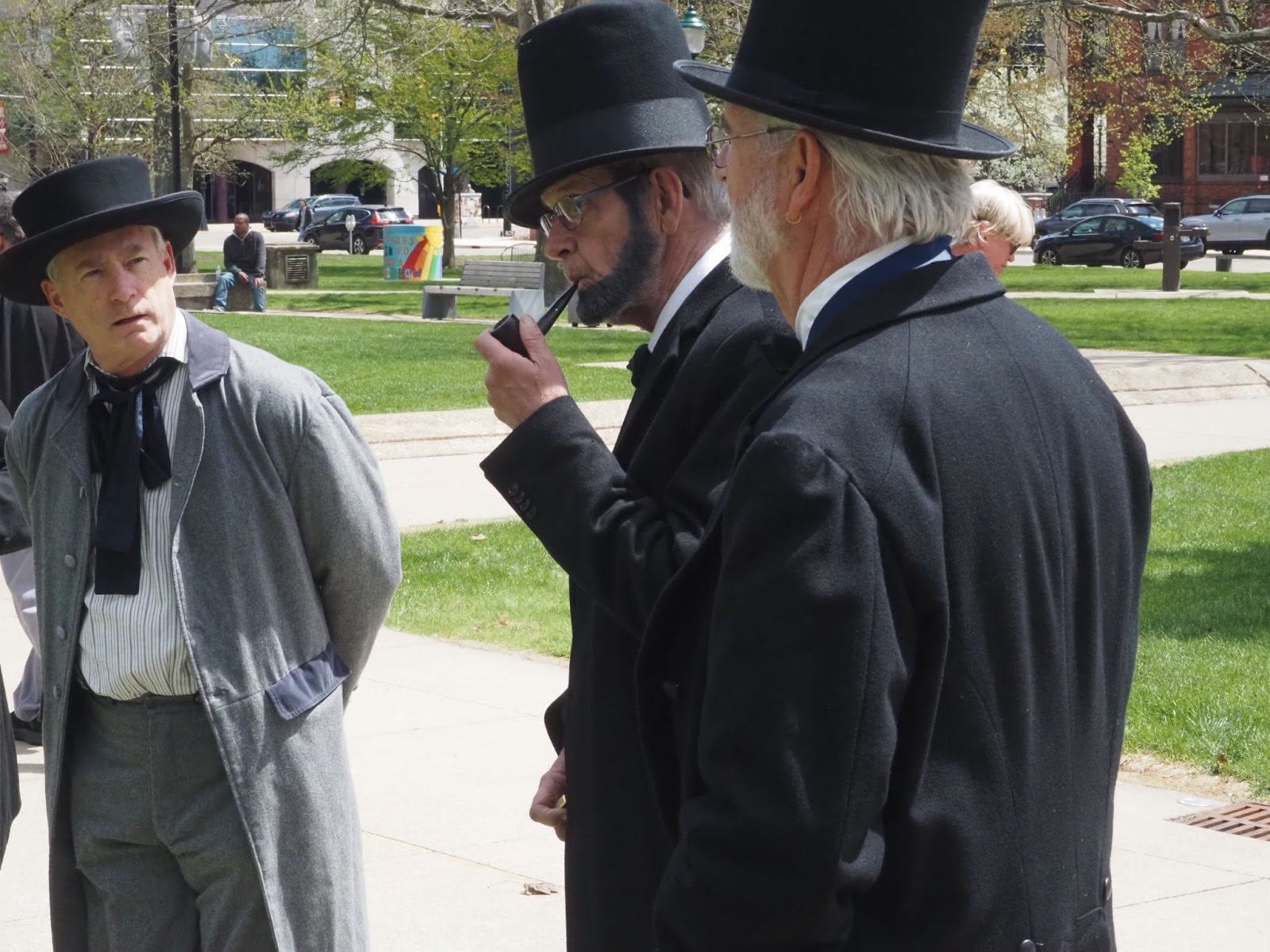
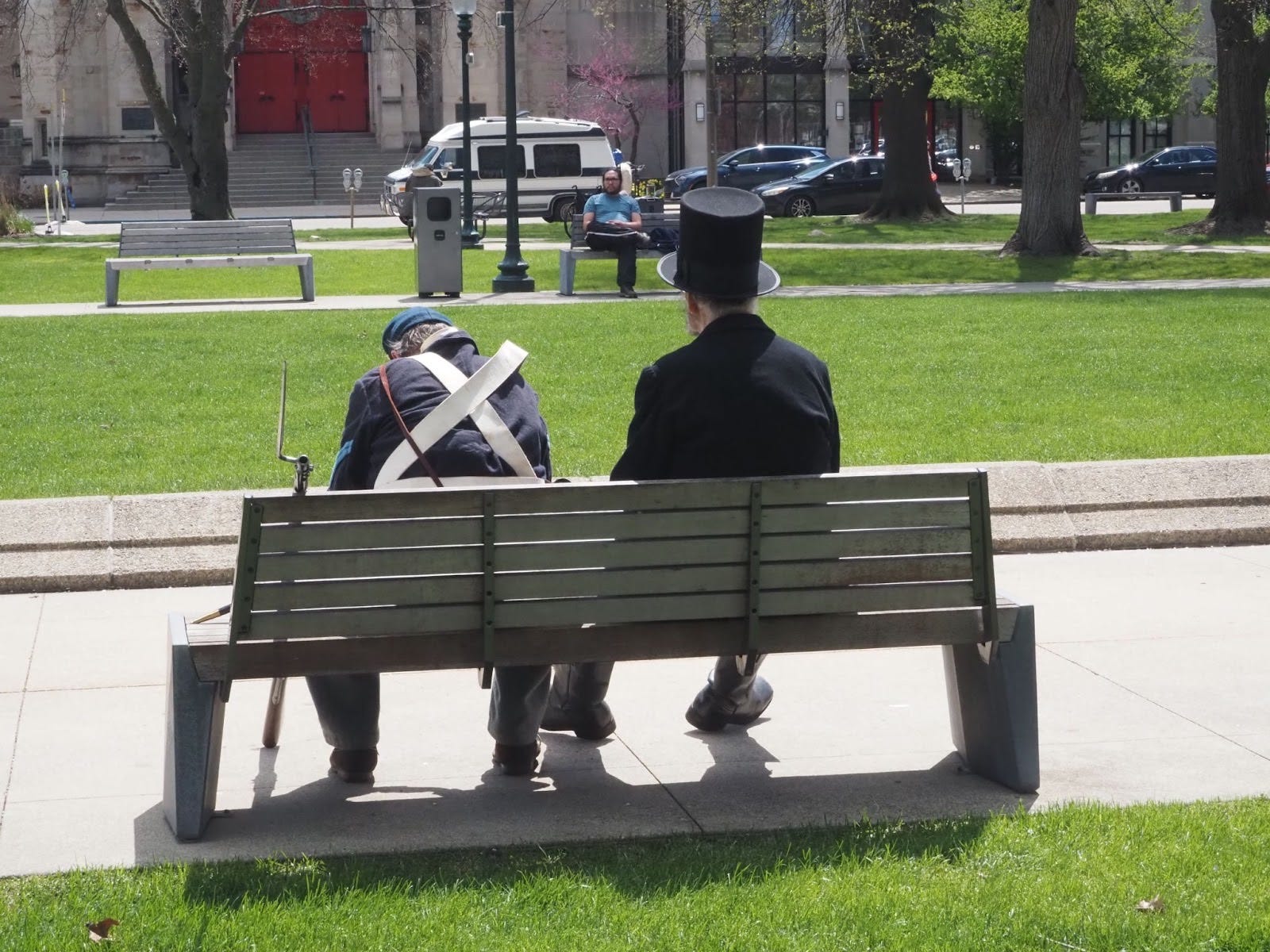
“I need to get my Lincolns organized here,” Kevin Wood muttered to his wife.
Wood called all the presenters together next to a statue of Lincoln, explaining that this was where “we” gave a speech centuries earlier. The conference’s photographer, Tom George Davison, organized the Association members around the statue based on heights — meaning the Lincolns, of course, all stood in the back.
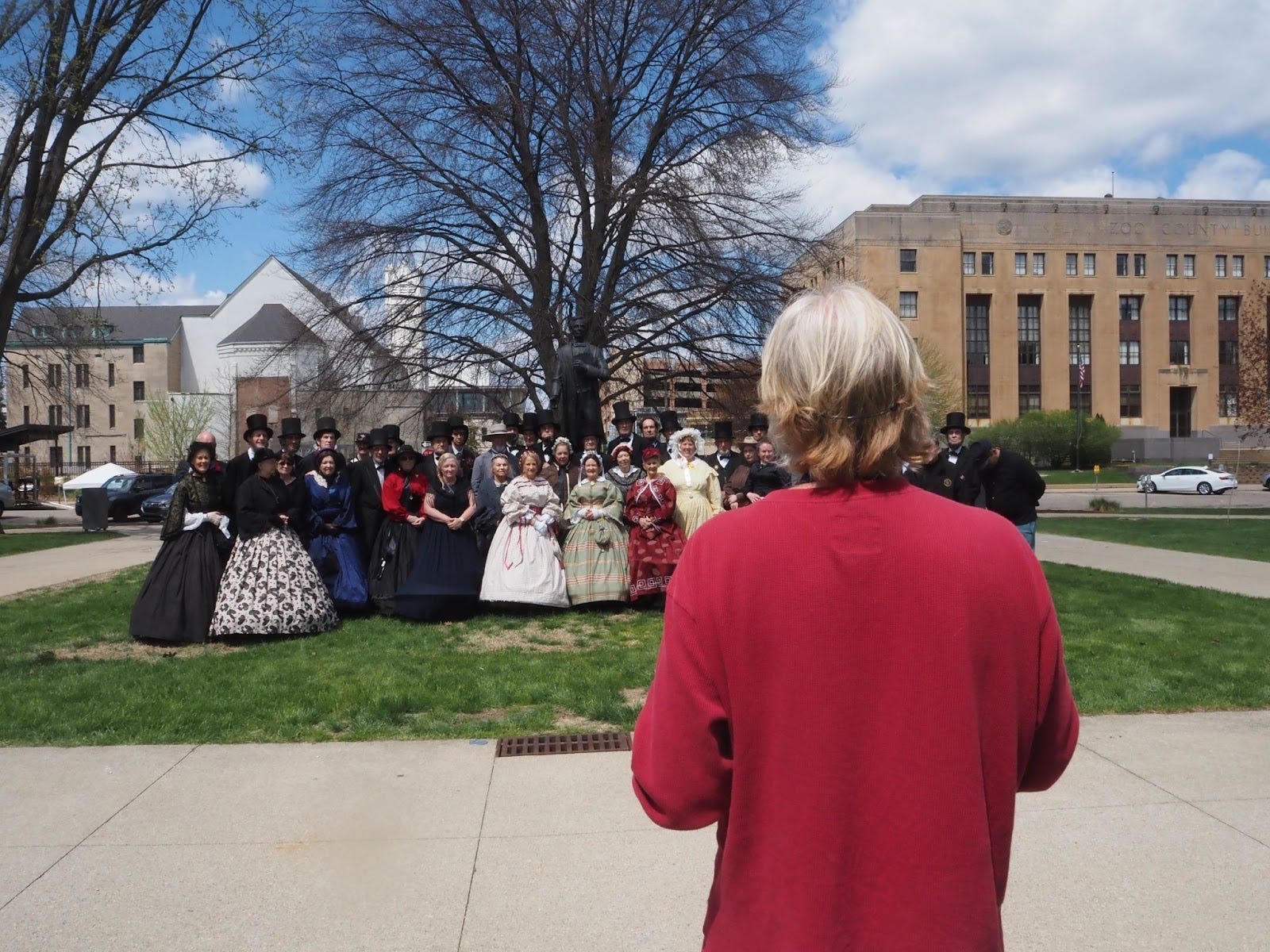
But Boggs worries those group photos aren’t going to be happening in a few years. Most Lincolns are old because, well, Lincoln was old, aged and weathered by his time in the White House. Boggs said the Lincolns in the association are passing away and new Abes aren’t stepping up because it’s a challenge to start as a historical reenactor in 2025: getting into schools has become harder with added concerns about violence and lingering isolation from the COVID-19 pandemic.
“It’s getting harder to get newer people to want to do this,” he said.
Boggs does what he can to keep the dream alive. He recruits new Lincolns, just as he was recruited back in 1990. Whenever he sees a young, tall, lanky guy, he tries to convince them to become Lincoln presenters. He said while most people are confused by his offer, some accept: last year, he brought two new Lincolns to Hodgenville.
“I say ‘You would make a good Lincoln if you want to come to Hodgenville, Kentucky, and go to that look alike contest,’” Boggs said.
Larry Elliott, a Lincoln from Hodgenville, said the hobby is also just really hard to start. Elliott, as he called me from his “Lincoln office,” explained that being Lincoln requires years of studying and thousands of dollars for costuming. Without a robust market of schools welcoming new performers, Elliott said fewer people are willing to take up a “hobby” that “costs money” but has “virtually no money in it.”
“We have only three new members this year, and six died,” he said. “At that rate, our group is not going to be around much longer.”
Kevin Wood blames history. He said there has been a “natural ebb and flow” in Lincoln presenting. Last decade, there was more interest in the Civil War as the conflict turned 150 years old. Those reenactments aren’t as common now.
But Wood said he’s also worried that people are going to stop caring about history, and Lincoln, altogether. He said he’s gotten fewer bookings in recent years because Americans are ignoring history. Schools focus on science and math. In the public, contemporary politics dominate the discourse, rather than historical reflections. Wood said he’s close enough to retirement that he’s not fearful for his own financial future, but he doubts if other people will take up the bearded mantle anytime soon.
“My concern is that it reflects a greater movement in this country, away from considering history to be important and history to being something that teaches us about our own times, and that’s what worries me,” he said.
But on the last night of the Association of Lincoln Presenters conference, the Lincolns weren’t worried about the future. They were living in the past. The conference’s final event was called “Saturday Night (A)live,” where eight Lincolns individually acted out together three minute presentations to form a birth-to-death story of Lincoln’s life. The Lincolns spoke from a spotlighted wooden floor in the Judy K. Joliffe Theatre, three blocks from their conference hotel. The handful of conference attendees who didn’t participate and about 20 members of the public filled three sets of bleachers. Wood introduced the event, before settling into his front row seat and removing his top hat in favor of a Detroit Tigers baseball cap.
“I recognize some fellas dressed like Abraham Lincoln,” he said while previewing the night’s festivities.
Each of the eight speakers had come to Lincoln for their own reasons, and they all had their own vision and own sliver of Honest Abe. But by performing together, they lived out the original goal of the Association of Lincoln Presenters: they linked the Lincolns. The first presenter, Robert Broski, wore a coonskin cap and held an ax as he talked about Lincoln’s rural upbringing and how he was “poor and not sure where I’ll be going in the future.” The next Lincoln, Homer Sewell, struggled to stand up straight as his age got the better of him. He talked about Lincoln’s life as a “good, honest lawyer” in Springfield. The glasses-wearing Glenn Murray continued to discuss Lincoln’s love of “lawyering,” while Steve Wood read aloud from a small tan book about Abe’s legendary Kalamazoo speech.
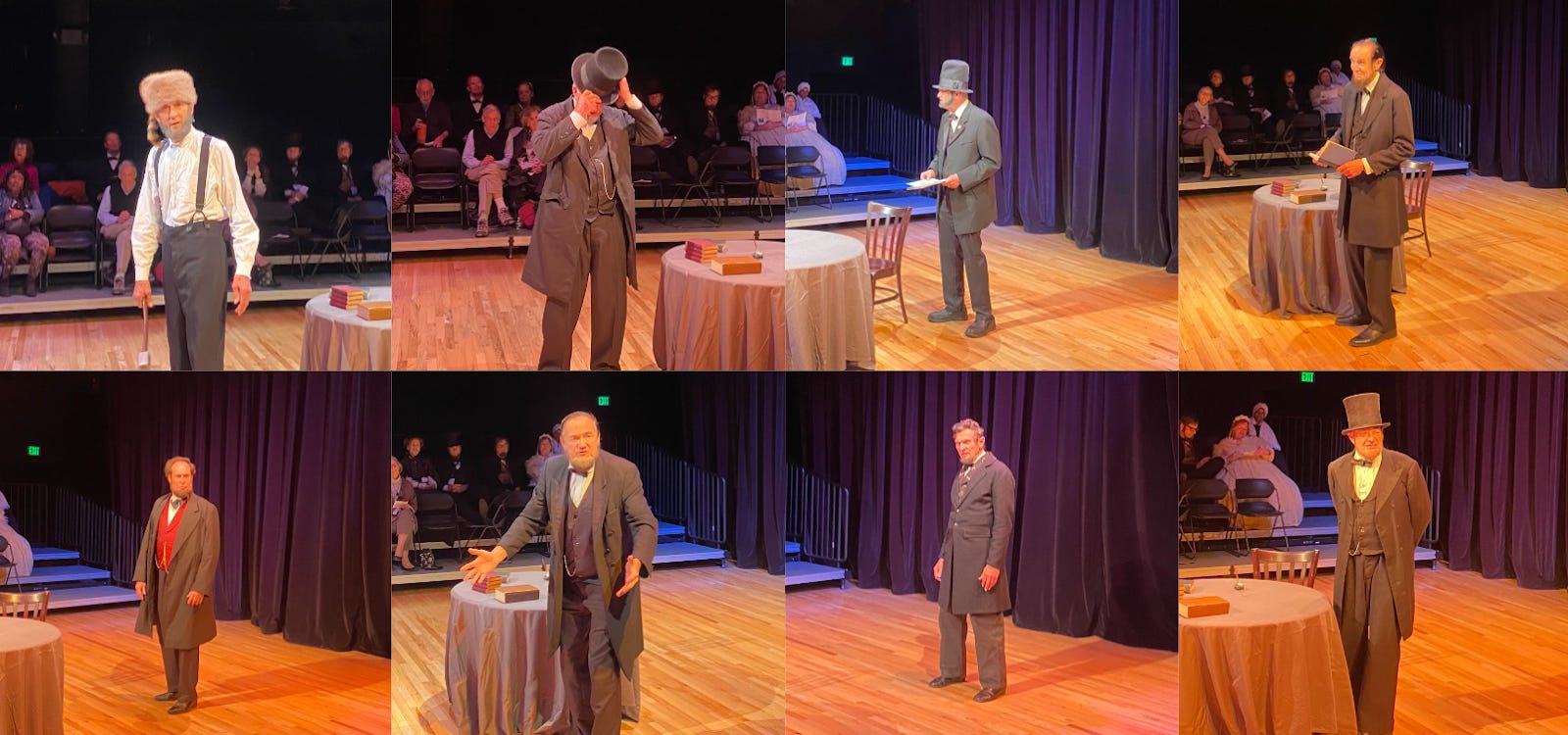
Dennis Boggs, who came out without a top hat on, covered Lincoln’s first term as president “under great and peculiar difficulties.” John Cooper then emerged from the wings playing a harmonica before delivering an emphatic performance of the Gettysburg Address. He was followed by Joseph Woodard, who recited Lincoln’s Second Inaugural Address through a deep Southern drawl. The final Lincoln, Murray Cox, explained Lincoln’s goals for his second term and the Reconstruction of the South, before saying he had to go meet Mary to get to a showing of “Our American Cousin” at Ford’s Theatre.
“We both look forward to a more peaceful and cheery future,” Cox said as he exited.
After Cox spoke, Wood called the group of eight presenters back onto the makeshift stage for a round of applause. He reminded the onlookers that everyone on stage shared one story: Lincoln’s.
“It’s nice for us Lincolns to all be back in Kalamazoo after so many years,” he said.